Gestalt Language Processing: What It Is, How It Works, and How Speech Therapy Can Help
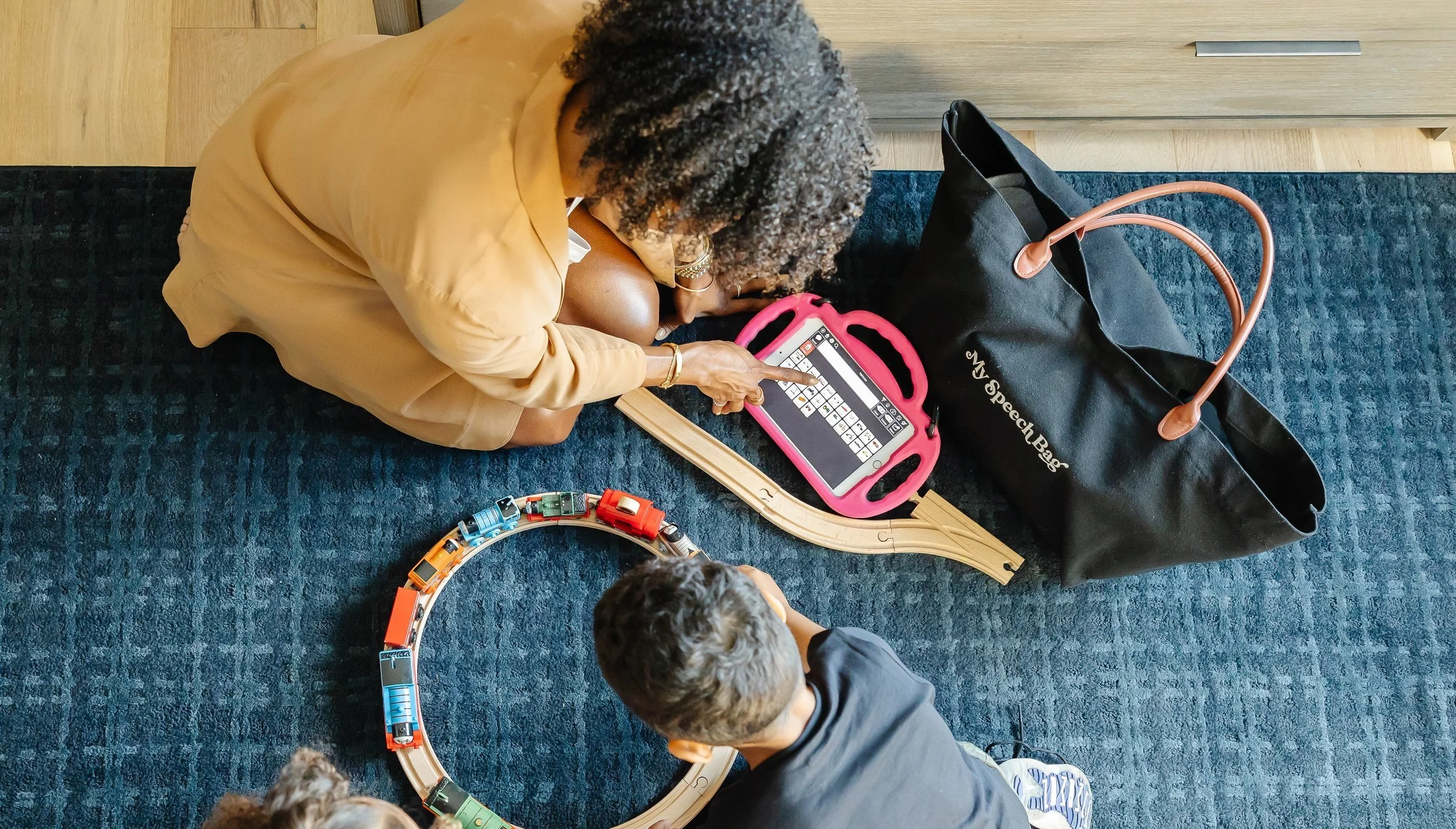
If your child repeats phrases from TV shows, songs, or things you’ve said and you’re wondering what that means, you’ve come to the right place!
Gestalt Language Processing is a way some children learn language by picking up whole phrases or “chunks” instead of single words first. Many autistic children are gestalt language processors, but not all, and being a gestalt language processor is not a diagnosis or something that needs to be fixed.
These repeated phrases (often called echolalia) are a real form of communication. Even if they don’t sound typical, they often carry meaning, emotion, and intent.
In this post, we’ll explain what gestalt language processing is, how it develops, and how speech therapy can support your child in a way that respects how they communicate and helps language grow naturally over time.
What Is Gestalt Language Processing?
Gestalt Language Processing means a child learns language through familiar phrases before moving toward single words.
For example, instead of learning the word “help” on its own, a child might learn a full phrase like “Can you help me?” from a show, a song, or something a caregiver often says. That entire phrase holds meaning for them, even if they aren’t yet breaking it apart into individual words.
This is different from what’s often called analytic language processing, where children typically learn single words first and then begin combining them into longer sentences. Neither approach is better or more “correct.” They’re simply different ways the brain organizes language.
Gestalt Language Processing is not a diagnosis, and it does not mean something is wrong. It’s a natural language development style seen in many children, including but not limited to, some autistic children.
Understanding how your child processes language helps adults know how to respond, model language, and support communication in ways that honor their unique language-learning process.
👉🏻Have questions about your child’s speech? Sign up for a 1:1 caregiver consultation!
Is Gestalt Language Processing Associated With Autism?
You may hear about gestalt language processing most often in conversations about autism, and that’s because many autistic children are gestalt language processors. However, it’s important to know that the two are not the same thing.
Not all autistic children process language this way, and not all gestalt language processors are autistic. Gestalt Language Processing is a language processing style, not a diagnosis.
Some autistic children use echolalia (repeating phrases from shows, songs, or familiar people) as part of their communication. While this is sometimes misunderstood, echolalia is often purposeful and meaningful. A repeated phrase may express a want, an emotion, a memory, or a way to connect with others.
Understanding this can help shift the focus away from labels and toward what really matters: how your child is communicating and how to support that communication. When adults recognize echolalia as meaningful, children are more likely to feel understood and supported as their language continues to grow.
👉🏻 Related: A complete guide to parent coaching with a speech therapist
What Is Echolalia and Why It Matters
Echolalia is when a child repeats words or phrases they’ve heard before. This might be lines from a favorite TV show, lyrics from a song, or familiar phrases they hear from parents, teachers, or caregivers.
To adults, echolalia can sometimes sound random or scripted but for many children, it’s actually a meaningful way to communicate.
A repeated phrase might be your child’s way of:
Asking for something
Expressing excitement, frustration, or comfort
Coping with big feelings
Connecting with someone or a situation they recognize
In other words, echolalia isn’t just repetition for the sake of repetition. It often carries emotion, intent, and understanding, even if it doesn’t sound like typical speech.
When echolalia is recognized as communication, adults can respond in ways that support language growth, rather than trying to stop or “fix” it.
Understanding Echolalia: Immediate vs. Delayed
There are two common types of echolalia are immediate echolalia and delayed echolalia.
Immediate Echolalia Definition
Immediate echolalia happens when a child repeats words or phrases right after they hear them.
This might look like:
Repeating a question instead of answering it
Echoing a phrase an adult just said
Repeating a direction or statement word-for-word
Immediate echolalia can serve many purposes. It may help a child:
Process language
Stay engaged in an interaction
Indicate understanding
Regulate or stay connected during communication
Even when it sounds like copying, immediate echolalia is often part of how a child is actively participating in the interaction.
Delayed Echolalia
Delayed echolalia occurs when a child uses phrases they’ve heard earlier, sometimes hours, days, or even weeks later.
These phrases may come from:
TV shows or movies
Songs or videos
Familiar routines or past conversations
Delayed echolalia is often highly meaningful. A child may use a familiar phrase to:
Express a feeling
Request something
Comment on a situation
Communicate comfort, excitement, or frustration
Even if the words don’t match the moment exactly, the phrase often carries emotional or situational meaning for the child.
Why This Difference Matters
Understanding whether echolalia is immediate or delayed helps adults respond more thoughtfully. Rather than trying to stop echolalia, supportive approaches focus on:
Listening for the meaning behind the words
Responding to the message, not just the repetition
Modeling language that fits the child’s intent
Both immediate and delayed echolalia are valid forms of communication and can be important building blocks for language development when they’re recognized and respected.
Is Gestalt Language Processing a Problem That Needs Treatment?
No, gestalt language processing itself does not need to be “fixed.” It’s simply one of the many ways children naturally learn and use language.
What does help is support that respects how your child’s brain organizes language. When adults understand that a child is learning in chunks, they can respond in ways that feel safe, meaningful, and supportive, rather than trying to push language to look a certain way too soon.
Approaches that can be less helpful for gestalt language processors include forcing single-word responses before a child is ready or practicing language through drills that don’t connect to real life. These strategies may unintentionally add pressure or reduce a child’s willingness to communicate.
Supportive speech therapy focuses on natural interactions, shared moments, and modeling language in ways that make sense to the child, allowing communication to grow without rushing or correcting their natural process.
How Speech Therapy Supports Gestalt Language Processors
Speech therapy for gestalt language processors isn’t about changing how a child communicates, it’s about meeting them where they are and helping language grow from there.
Affirming, modern approaches to gestalt language processing treatment often include:
Following the child’s lead, rather than directing or testing language
Modeling functional, emotionally meaningful language that fits real moments
Using natural, play-based interactions instead of drills or flashcards
Supporting movement through language milestones without pressure or timelines
When therapy respects a child’s communication style, children are more likely to stay engaged, feel understood, and use language more freely. Over time, this support helps language become more flexible and functional, without forcing speech to look “typical” before a child is ready.
Common Goals in Gestalt Language Processing
Goals for gestalt language processors are not about rushing language or making communication look a certain way. Instead, they focus on supporting meaningful, functional communication that works for your child.
Some common gestalt language processing goals may include:
Increasing a child’s intent to communicate, in ways that feel natural and motivating
Supporting more flexible language use across different situations
Expanding and building on meaningful scripts a child already uses
Helping children express wants, needs, thoughts, and emotions more clearly
Supporting regulation and connection through language, especially during big feelings or transitions
These goals are individualized and often change over time. Progress may look subtle at first, but even small shifts in how a child communicates can make everyday interactions feel easier and more connected.
How UniVie Therapy Supports Gestalt Language Processors
At UniVie Therapy, speech support for gestalt language processors is grounded in understanding, respect, and real-life communication, not pressure or rigid expectations.
Our team receives specialized training in Gestalt Language Processing and works from a neurodiversity-affirming, child-led approach. Speech therapy is designed to honor how each child naturally communicates while supporting meaningful language growth over time.
UniVie Therapy offers several ways families can receive support:
In-person speech therapy in Springfield, Illinois and surrounding areas
Caregiver coaching worldwide, for parents who want guidance and support no matter where they live
Whether you’re looking for direct speech therapy or speech coaching to better understand and support your child at home, UniVie Therapy meets families where they are.
When to Reach Out for Speech Support
You don’t need to be certain (or concerned) to reach out for support. Many families seek guidance simply because they want to better understand what they’re seeing and how to respond in ways that truly help.
You might consider reaching out if you:
Feel unsure about your child’s echolalia or what it means
Have received conflicting advice about how to support your child’s communication
Want clearer guidance on how to support language at home in a way that feels natural and respectful
Support around gestalt language processing is most effective when it’s collaborative. Caregiver education, shared understanding, and realistic speech strategies can make everyday communication feel less confusing and more connected, for both you and your child.
Trusting Your Child’s Communication
Language doesn’t have to look typical to be meaningful. Many gestalt language processors are communicating long before it’s obvious to the adults around them and when that communication is recognized and respected, it has space to grow.
Your child’s words, phrases, and scripts are not mistakes. They’re part of how your child connects, expresses emotions, and makes sense of the world. With understanding, patience, and the right kind of support, language can continue to develop in ways that feel natural and empowering.
If you have questions, want guidance, or simply want to better understand how to support your child’s communication, you don’t have to figure it out alone. UniVie Therapy is here to support both children and caregivers with care, collaboration, and respect.
👉🏻 Reach out anytime here to connect, ask questions, or learn more about supportive options.

Hi, I’m Daj! Founder of UniVie Therapy
.
I started UniVie Therapy Solutions with one simple goal: to help individuals of all ages communicate with confidence! My work is grounded in personalized, evidence-based support that honors each person’s strengths, needs, and differences. Whether I’m working with children, families, caregivers, or individuals, my approach is always collaborative, affirming, and focused on real-life communication.
If you’d like to learn more or stay connected, here are a few helpful resources: