Pediatric Speech Therapy in Springfield, IL: A Guide for Parents
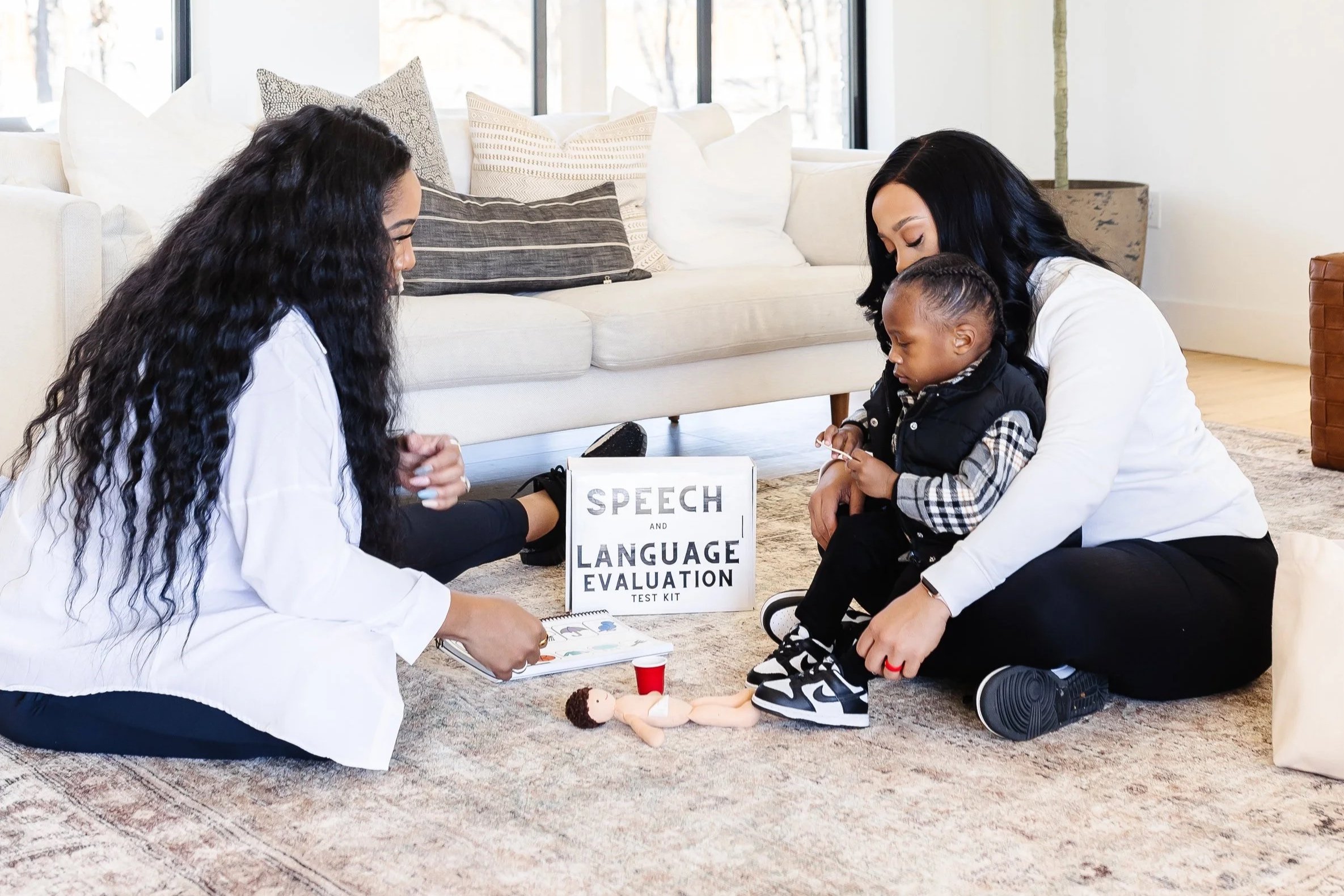
If you’re researching pediatric speech therapy, chances are you’re starting to notice a few patterns.
👉 A daycare teacher casually mentions that your child isn’t talking as much as their peers.
👉 Your pediatrician says, “Let’s just keep an eye on it,” for the third visit in a row.
👉 You notice your child understands everything but can’t quite get the words out.
👉 Or feeding has always felt harder than it seems for other families, and you’re not sure why.
At first, none of this feels urgent. But over time, everyday moments start to feel harder. Routines take longer. Transitions get tougher. Frustration shows up more often (for your child and for you!).
If this sounds a bit too familiar, it may be a sign that speech or communication support could help.
This guide explains what pediatric speech therapy is, what speech-language pathologists do, and how you can get started with a certified speech therapist near you!
What Is Pediatric Speech Therapy?
Pediatric speech therapy supports children who have difficulty with speech sounds, understanding language, using language, social communication, feeding, swallowing, or accessing communication.
Children may benefit from speech therapy for many reasons, including developmental delays, speech sound disorders, autism, genetic conditions, hearing differences, or feeding concerns.
A child does not need to have a diagnosis to receive speech therapy support!
Speech therapy is individualized and based on each child’s strengths, needs, and daily environments.
Therapy may focus on spoken language, play skills, understanding language, social communication, or functional communication using speech, gestures, signs, or augmentative and alternative communication (AAC), such as picture systems or speech-generating devices.
Services can take place in a clinic, at home, in a daycare, or at school, depending on the child’s age and setting. Speech-language pathologists work closely with caregivers and typically use play-based and routine-based approaches so skills carry over into everyday life.
What Does Pediatric Speech Therapy Work On?
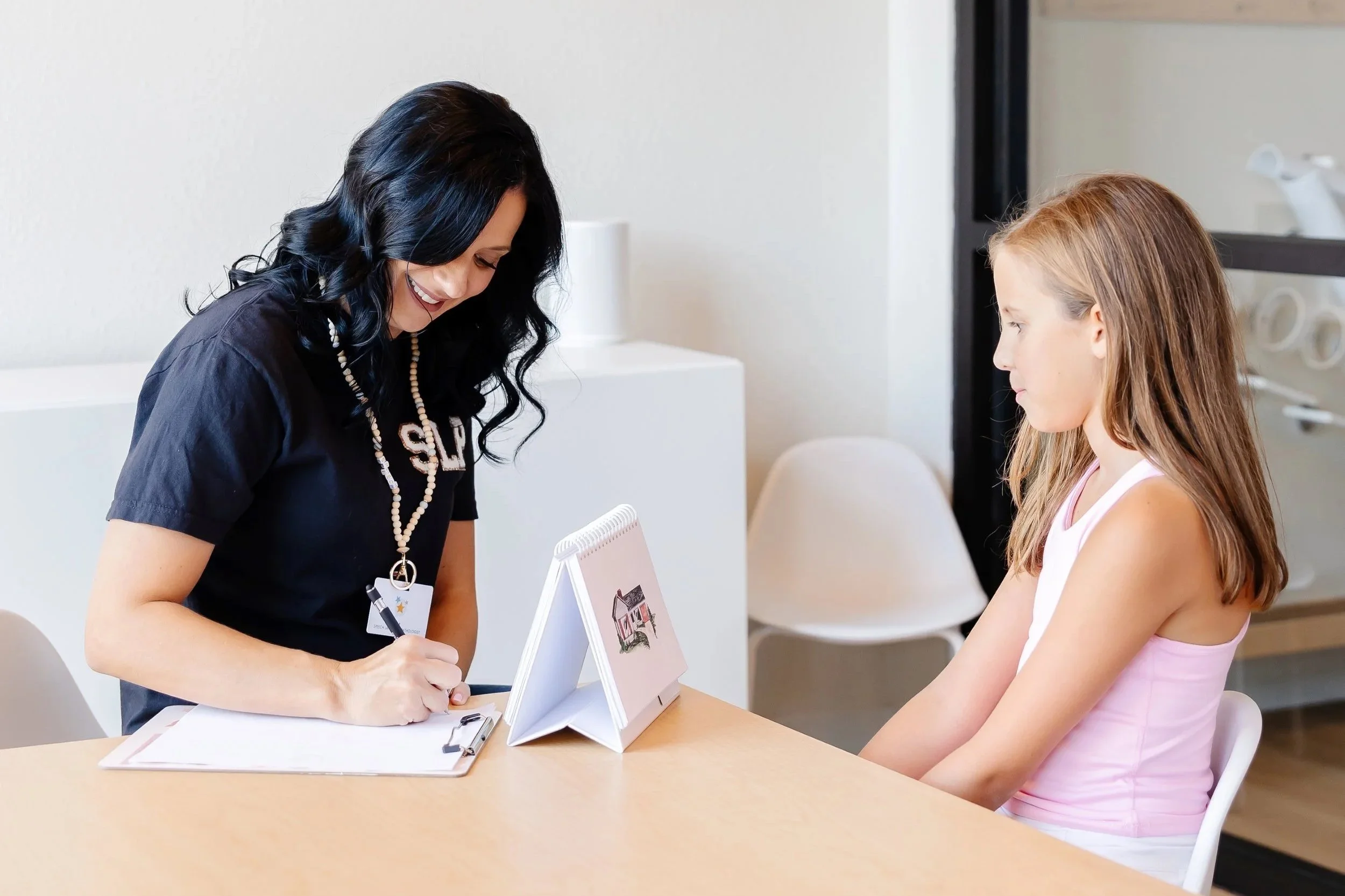
Pediatric speech therapy covers a wide range of skills, because communication shows up in many different ways. What therapy focuses on depends entirely on the child, but these are some of the most common areas:
1. Speech Therapy for Speech Sound Development
Speech sound development refers to how children learn to make and combine sounds clearly as they grow. It’s normal for young children to mispronounce words or simplify sounds early on. Over time, those patterns typically fade as speech becomes easier to understand.
For some children, though, certain sounds remain difficult or speech is harder for others to understand than expected for their age. You might notice your child leaving sounds out of words, replacing one sound with another, or being frequently misunderstood by family members, teachers, or peers.
Pediatric speech therapy supports children as they learn how to produce sounds more clearly and confidently. A speech-language pathologist looks at which sounds are challenging, how your child is using their mouth and tongue, and how speech patterns are developing overall. Therapy focuses on building clear, functional speech in a way that feels encouraging and achievable.
2. Speech Therapy for Language Development (Understanding & Using Language)
Language development is about more than saying words. It includes how children understand language (what’s being said to them) and how they use language to express thoughts, needs, questions, and ideas.
Some children may understand everything you say but have a hard time finding the words to respond. Others might talk a lot, but struggle to follow directions, answer questions, or put ideas together in a clear way. You might notice short sentences, difficulty learning new words, trouble with grammar, or frustration when your child can’t communicate what they’re thinking.
Pediatric speech therapy helps support both sides of language, understanding and expression. A speech-language pathologist works with your child to build vocabulary, sentence structure, comprehension skills, and confidence using language in everyday situations. Therapy is play-based, functional, and designed to support communication that actually shows up in real life, not just in sessions.
3. Speech Therapy For Social Communication & Play Skills
Social communication is how children use language and interaction to connect with others. This includes skills like self-advocacy, safety and awareness and the understanding of pragmatic language across neurotypes during play or group activities.
Some children may enjoy playing on their own but struggle to join others. Others may want to interact but aren’t sure how to start or understand what peers are expecting in social situations. You might notice challenges with responding appropriately during games and routines.
Pediatric speech therapy supports children in developing these social communication and play skills in ways that feel natural and meaningful. A speech-language pathologist uses play, routines, and real-life scenarios to help children practice interacting, expressing themselves, and building relationships using a neurodiversity-affirming approach.
4. Speech Therapy for Feeding & Swallowing Support
Feeding is more than just eating. It involves coordination, comfort, sensory experiences, and trust. When feeding feels stressful or difficult, it can affect not only nutrition but also daily routines and family mealtimes.
Some children may have trouble chewing or swallowing, avoid certain textures, gag frequently, eat a very limited range of foods, or take a long time to finish meals. Others may struggle with bottle or cup transitions, oral motor coordination, or mealtime behaviors that feel overwhelming for everyone involved.
Pediatric speech therapy can support feeding and swallowing by looking at the skills involved in eating safely and comfortably. A speech-language pathologist helps identify what may be making feeding challenging and works with families to build skills gradually and respectfully, always prioritizing safety and the child’s individual needs.
5. Speech Therapy for Functional Communication & AAC
Functional communication is about helping children communicate in ways that are meaningful and effective for their everyday lives. This might include spoken words, gestures, signs, pictures, technology or whatever works best for the child to express wants, needs, thoughts, and feelings.
Some children may have limited verbal speech, while others may struggle to communicate consistently across settings. You might notice frustration, behaviors tied to communication breakdowns, or difficulty getting messages across to caregivers, teachers, or peers.
Pediatric speech therapy supports functional communication by identifying the most accessible and empowering ways for a child to communicate. This can include Augmentative and Alternative Communication (AAC), such as picture systems, communication boards, or speech-generating devices. AAC does not replace spoken language, it supports communication and often helps language grow over time.
Who Can Benefit From Pediatric Speech Therapy?
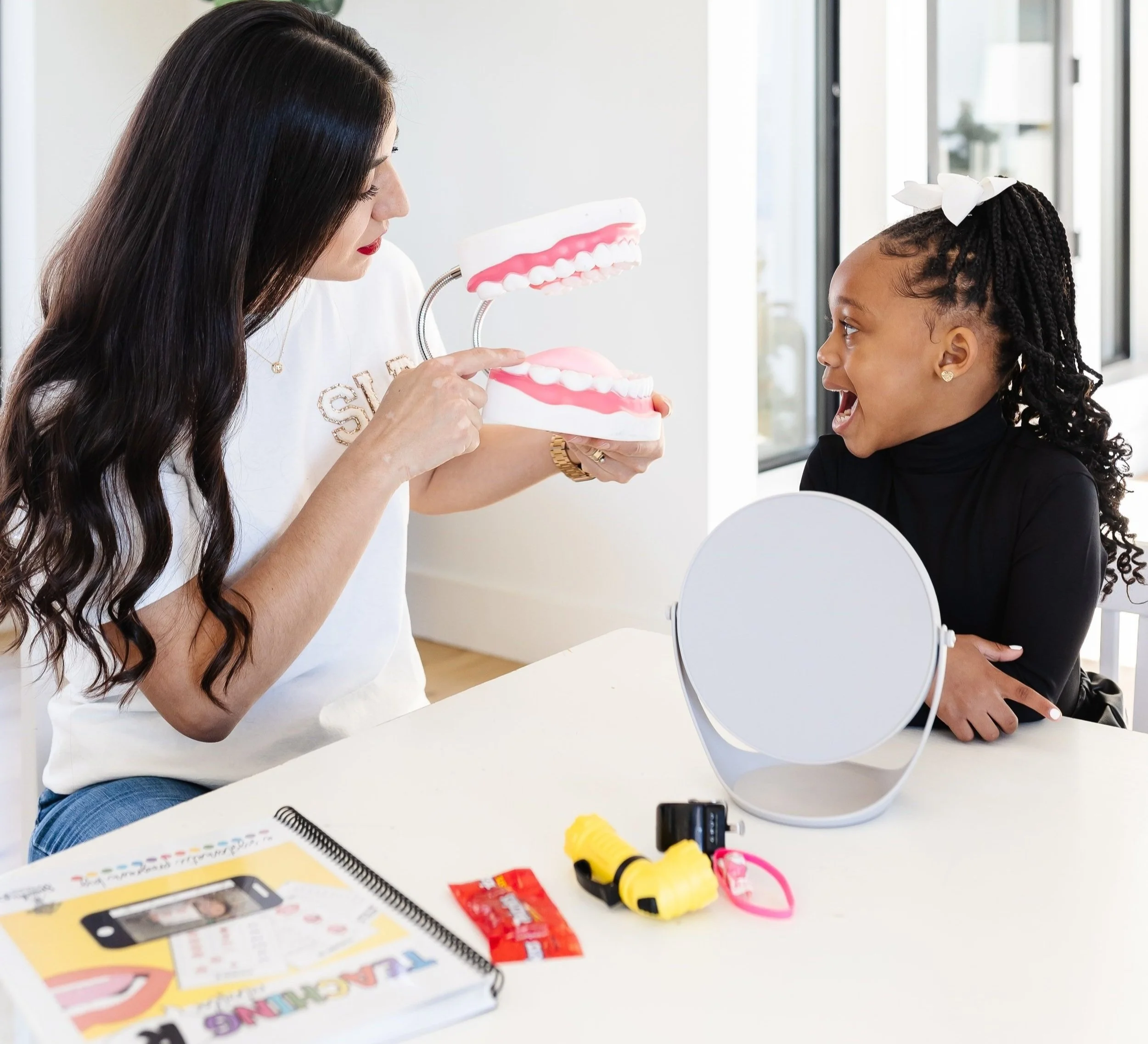
There isn’t one “type” of child who benefits from pediatric speech therapy. Kids come in for many different reasons, and often it’s not about a single label, it’s about how communication is working (or not working) in everyday life.
Some children benefit from speech therapy because of developmental delays, where skills like talking, understanding language, or interacting socially aren’t developing as expected. Others may have speech sound disorders, where they know what they want to say but are difficult to understand.
Speech therapy also supports children with autism and other neurodivergent communication profiles, helping them find meaningful ways to communicate and connect with others. For some children, communication challenges are related to genetic or medical conditions or hearing differences, which can impact how speech and language develop over time.
What Does Pediatric Speech Therapy Look Like?
1. Individualized, Child-Centered Therapy
Pediatric speech therapy isn’t a set program that every child follows. Therapy plans are built around your child’s strengths, interests, and specific needs. What works for one child may not work for another, and therapists adjust goals and approaches as children grow and change.
The focus is on supporting skills that matter in real life, not checking boxes. Progress is measured by how communication improves across everyday situations, not by completing a worksheet or activity.
2. Play-Based and Routine-Based Approaches
For young children, play is how learning happens. That’s why speech therapy often looks like playing on the floor, singing songs, or moving through familiar routines rather than sitting at a table.
Therapists use play as a natural way to support communication, weaving goals into activities that already feel motivating and meaningful. Everyday routines like mealtime, getting dressed, or transitioning between activities, are also used as opportunities to build communication skills that carry over beyond sessions.
3. Caregiver Involvement
Caregivers are an important part of pediatric speech therapy. Therapists work closely with families to explain what they’re seeing, why certain strategies are helpful, and how to support communication at home.
Rather than giving a long list of things to practice, therapists focus on simple, realistic speech strategies that fit into daily life. The goal is carryover, helping communication improve not just during therapy, but throughout the week in the moments that matter most.
Where Does Pediatric Speech Therapy Take Place?
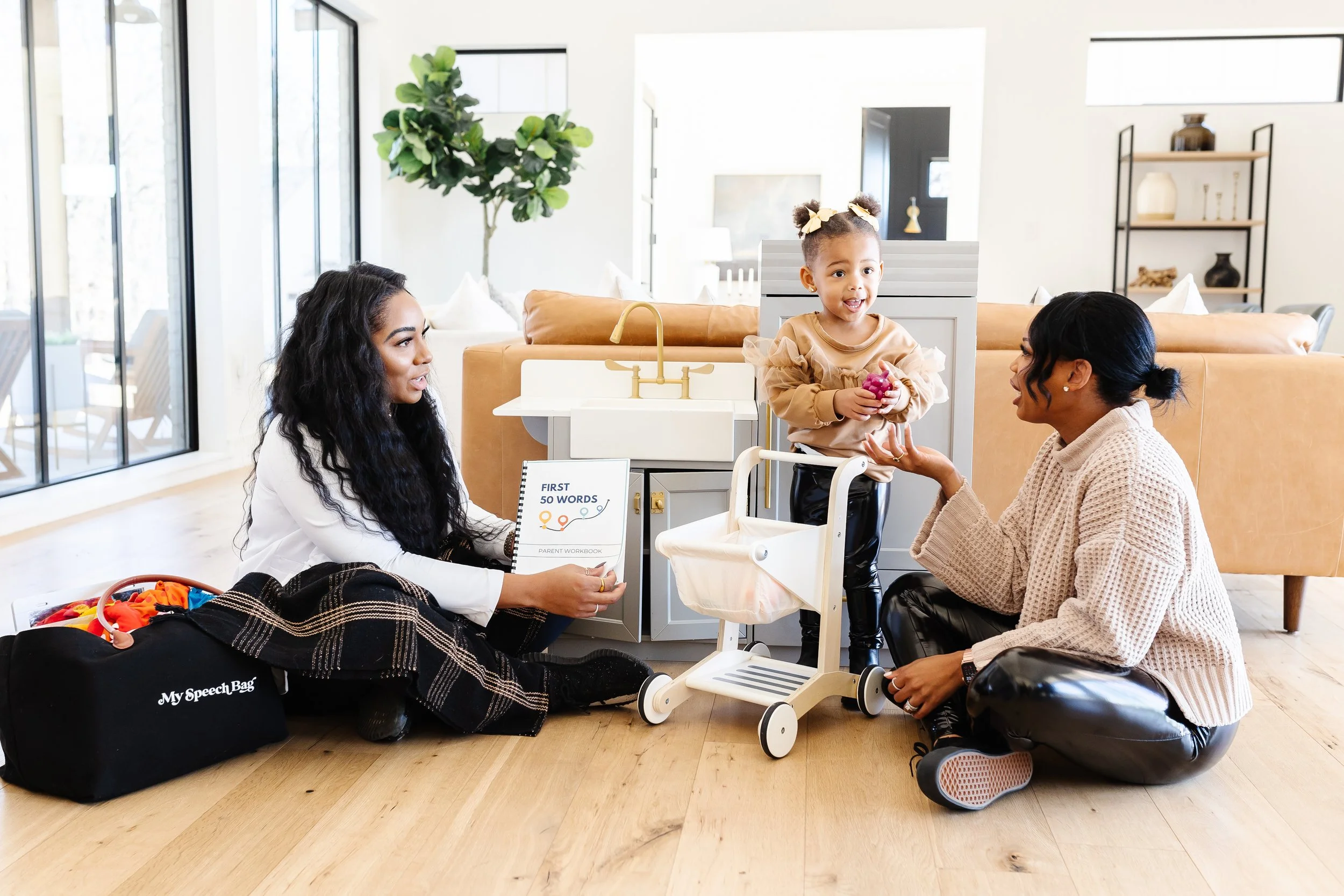
Pediatric speech therapy doesn’t only happen in one place. The setting often depends on a child’s age, needs, and what makes the most sense for the family.
Some children receive clinic-based speech therapy, where sessions take place in a dedicated therapy space. Others benefit from home-based services, especially when communication challenges show up most clearly during daily routines.
Speech therapy can also happen in daycare or early learning settings, where therapists support communication within natural peer interactions. For school-aged children, therapy may take place in school environments, either through private services or in collaboration with school-based speech supports.
Pediatric Speech Therapy vs. School-Based Speech Services
Parents often wonder how pediatric (private) speech therapy compares to school-based speech services, and the truth is that they serve different purposes.
School-based speech therapy focuses on how communication impacts a child’s ability to access and participate in their education, with goals often tied to academic standards.
Private pediatric speech therapy often looks at communication more broadly. It may address speech, language, social communication, feeding, or functional communication skills that affect a child’s daily life beyond school.
Some children receive school-based services while also attending private speech therapy, with each setting supporting different goals.
(This section can later link to a dedicated comparison blog.)
How Long Does Pediatric Speech Therapy Take?
Progress looks different for every child. Some children make noticeable changes quickly, while others need longer-term support as skills develop gradually. How long speech therapy lasts depends on many factors, including a child’s individual needs, how often sessions occur, and what communication looks like across daily environments.
Caregiver involvement also plays a big role. When strategies from therapy are used during everyday routines at home, progress often carries over more smoothly. Consistency across settings, home, school, daycare, can make a meaningful difference over time.
Rather than focusing on how fast things move, pediatric speech therapy focuses on meaningful, functional progress. The goal is steady growth that supports a child’s communication in real life, at a pace that works for them.
How to Get Started With Pediatric Speech Therapy in Springfield, IL
If you’re considering speech therapy for your child and you live in Springfield IL, the first step is usually scheduling an evaluation or consultation. This gives you the chance to talk through your concerns with a licensed speech-language pathologist and get a clearer picture of how your child communicates.
An evaluation helps identify your child’s strengths, areas of support, and whether speech therapy may be helpful right now. It’s also a space to ask questions, understand your options, and decide what makes sense for your family.

Hi, I’m Daj! Founder of UniVie Therapy
.
I started UniVie Therapy Solutions with one simple goal: to help individuals of all ages communicate with confidence! My work is grounded in personalized, evidence-based support that honors each person’s strengths, needs, and differences. Whether I’m working with children, families, caregivers, or individuals, my approach is always collaborative, affirming, and focused on real-life communication.
If you’d like to learn more or stay connected, here are a few helpful resources: