Reading Intervention Strategies And How to Support Them at Home
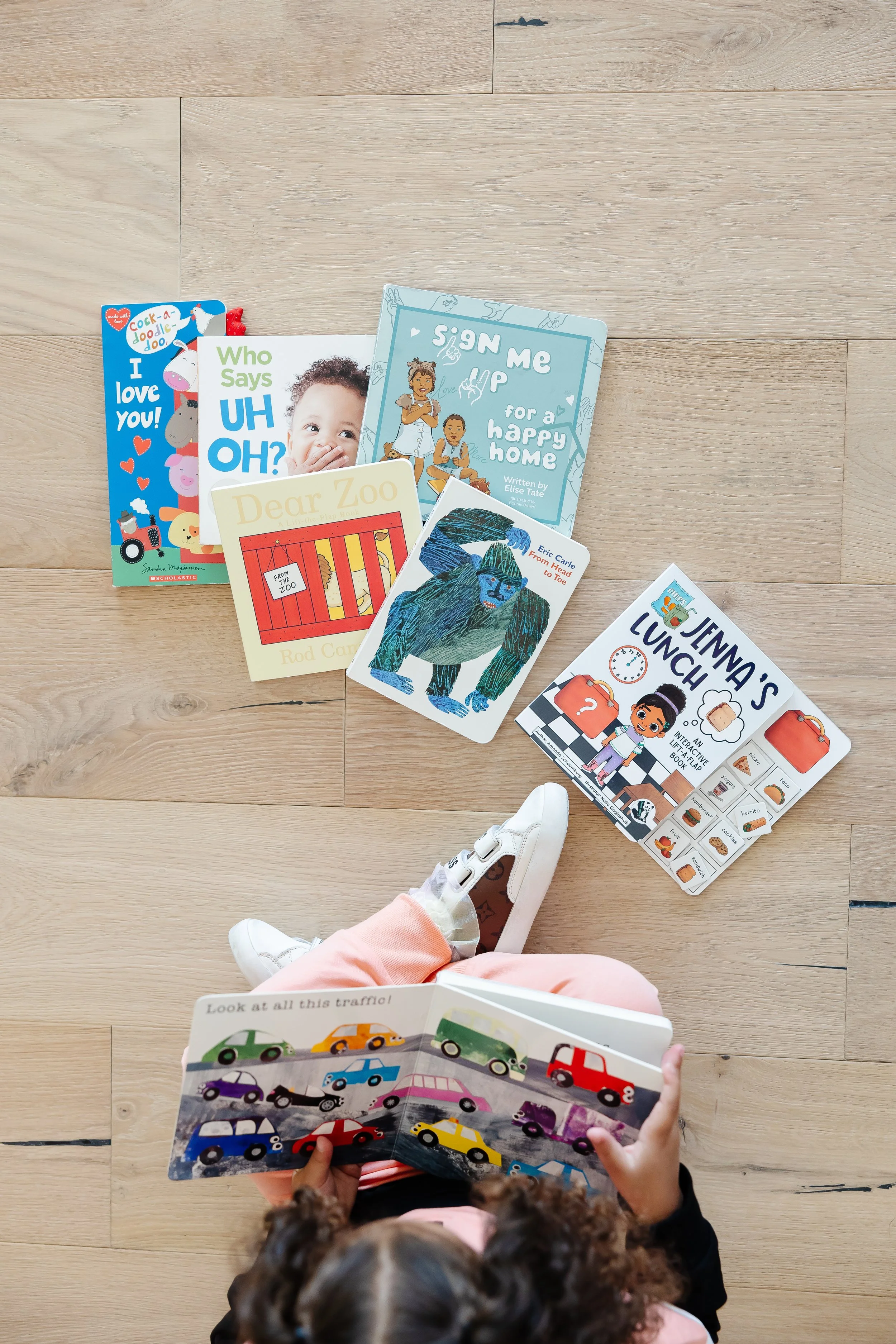
If your child is working with a reading specialist or speech-language pathologist, you have already taken a big step. But what happens between sessions matters just as much as the sessions themselves.
Reading intervention works best when the strategies being used in therapy are reinforced at home, in a low-pressure, consistent way.
You do not need to be a teacher.
You do not need to run formal practice drills every night.
You just need to understand what your child is working on and a few simple ways to support it.
This guide breaks down the most effective reading intervention strategies used by specialists today, explains why each one works, and gives you practical, parent-friendly ways to bring them home.
What are the most effective reading intervention strategies?
The most evidence-based reading intervention strategies include phonemic awareness training, systematic phonics instruction, repeated oral reading for fluency, vocabulary building in context, and structured comprehension practice. These are most effective when taught explicitly and applied consistently across home and school environments.
Need help with reading intervention? Book a complimentary discovery call today!
Why Reading Intervention Strategies Are Different from Regular Reading Practice
When most people picture helping a child read at home, they imagine sitting together with a book and taking turns reading pages. That kind of shared reading is wonderful, and you should absolutely keep doing it. But for a child who is struggling, it is usually not enough on its own.
Reading intervention strategies are structured, targeted, and explicit.
Rather than hoping a child absorbs reading skills through exposure, these strategies teach each skill directly and in a specific sequence. The research behind them is strong, and they are especially effective for children with dyslexia, language delays, or phonological processing differences.
The strategies below are the ones you will most often see used in professional reading intervention programs.
Related: What is an AAC evaluation?
6 Reading Intervention Strategies
1. Phonemic Awareness Training
Phonemic awareness is the ability to hear, identify, and manipulate individual sounds (called phonemes) in spoken words. It is a strong predictor of reading success in young children, and it is one of the first places reading intervention begins. This skill is entirely about sound, not print.
Children practice identifying the first sound in a word, blending sounds together to form a word, segmenting words into individual sounds, and substituting one sound for another. These activities are done out loud before a child ever picks up a pencil.
Try this at home: Play sound games in the car or at the dinner table. Ask: "What sound does 'cat' start with?" or "What word do these sounds make: /d/ /o/ /g/?" Even five minutes of this kind of playful practice builds the auditory foundation your child's specialist is working on in sessions.
👉🏻 Does your child need speech therapy? Find out here!
2. Systematic Phonics Instruction
Phonics teaches the relationship between letters and sounds so a child can decode (sound out) unfamiliar words rather than guess. Systematic means skills are taught in a specific sequence, from simple to complex: single consonants, short vowels, consonant blends, digraphs, vowel teams, and beyond.
This is the heart of structured literacy and the approach recommended by reading research for all struggling readers, including those with dyslexia. Unlike whole-language approaches that ask children to memorize words by sight, phonics gives children a reliable strategy they can apply to any word they encounter.
Try this at home: When your child gets stuck on a word, resist the urge to just tell them what it is. Instead, point to the first letter and say "What sound does that make?" then work through the word together, sound by sound. This reinforces the decoding habit their specialist is building.
Related: What is gestalt language processing?
3. Multisensory Learning
Multisensory instruction engages more than one sense at a time: seeing, hearing, speaking, and touch all at once. This approach is a cornerstone of Orton-Gillingham-based programs and has strong evidence for children with dyslexia.
When a child traces a letter in sand while saying its sound out loud, they are forming a stronger, more connected memory than if they had simply looked at the letter on a flashcard. Multisensory techniques work because they create multiple pathways to the same information, making it easier for the brain to retrieve and recall.
Try this at home: Use a small baking tray filled with sand, salt, or shaving cream and have your child trace letters or spelling patterns while saying the sound aloud. Letter tiles, magnetic letters, or even writing in the air with a finger are other easy multisensory activities you can do at home.
4. Repeated Oral Reading for Fluency
Fluency is the ability to read accurately, at a reasonable pace, and with expression. It matters because a child who is using all their mental energy to decode individual words has very little left over to understand what they are reading.
Fluency develops through practice with text at an appropriate level, and repeated reading is one of the most effective tools for building it. A child reads the same short passage multiple times, tracking their own improvement in speed and accuracy. This builds automaticity, the point where words are recognized instantly without effort.
Try this at home: Find a short passage at your child's comfortable reading level (not their grade level, their actual level). Read it together the first time, then have them read it on their own two or three times over a few days. Celebrate the improvement from day one to day three.
5. Vocabulary Instruction in Context
Vocabulary knowledge is directly tied to reading comprehension. A child cannot understand what they are reading if they do not know what the words mean. Effective vocabulary intervention does not mean drilling definitions from a list.
It means encountering words in meaningful contexts, discussing what they mean, seeing them used in different ways, and using them in conversation. Research shows a child needs to encounter a new word in multiple contexts before it truly becomes part of their vocabulary.
Try this at home: When you are reading aloud with your child and you hit an unfamiliar word, pause and talk about it. Do not just define it; ask them to guess from context, then confirm or correct together. Later in the day, see if you can work that word into a conversation naturally. Two minutes of this does more than a vocabulary worksheet.
Did you know: We offer reading tutoring - see the details!
6. Explicit Comprehension Strategy Instruction
Comprehension is the goal of all reading, but it does not develop automatically once decoding is in place. Struggling readers often need direct instruction in comprehension strategies: making predictions, visualizing what is happening, identifying the main idea, making connections to prior knowledge, and monitoring their own understanding.
These strategies are taught one at a time, with lots of modeling, until a child can apply them independently. Comprehension intervention is most effective after a child has solid decoding skills, because the two skill sets draw on different cognitive resources.
Try this at home: Before reading a page or chapter, ask your child what they think will happen. While reading, stop occasionally and ask: what is happening right now? What is the most important thing so far? These small check-ins build the active reading habit that strong comprehenders use automatically.
How to Support Reading Intervention at Home Without Making It Feel Like Homework

The most common thing parents tell reading specialists is: "I want to help but I do not want to make things worse." That concern is valid, especially if your child has started to associate reading with frustration or failure.
Here is how to create a home environment that supports their progress without adding stress.
Keep the stakes low
Avoid corrections that feel like judgment. Instead of "No, that's wrong," try "Let's look at that one again together." The goal at home is practice and exposure, not performance. Your child gets enough evaluation during the school day.
Follow the specialist's lead
If your child is working with a reading specialist or SLP, ask them what one or two things you can reinforce at home. A good specialist will give you specific, manageable activities aligned with what they are working on in sessions. Do not introduce new strategies on your own that might conflict with the approach being used.
Read aloud together every day
This is the single most powerful thing a parent can do for a child's literacy development, at any age. When you read aloud to your child, you expose them to rich vocabulary, complex sentence structures, and the joy of a good story, all without the cognitive load of decoding. Keep reading to your child even when they are old enough to read on their own.
Make books part of your environment
Children who have access to books at home read more. This sounds obvious, but it matters. Visit the library regularly. Let your child choose what they want to read, even if it seems too easy or not educational enough. A child who reads comic books is still a child who is reading.
Celebrate small wins loudly
A child who is struggling with reading has usually absorbed a lot of negative feedback about it, even from well-meaning sources. Make it a point to notice and name progress out loud. "You just sounded out that whole word by yourself" is powerful. "You used to skip that word and now you get it every time" is even more powerful.
Short and consistent beats long and occasional every time. Ten minutes of phonics practice four days a week will produce more progress than a 45-minute session once a week. Build small habits your family can actually sustain.
Reading Intervention Strategies by Age Group
Not every strategy is the right fit for every age. Here is a general guide to what tends to be the focus at different stages:
Ages 3 to 5 (Pre-K and Kindergarten)
Phonological awareness games: rhyming, clapping syllables, identifying first sounds
Letter-sound knowledge: learning that letters have names and sounds
Print awareness: understanding that text moves left to right, that spaces separate words
Shared book reading with lots of discussion and pointing
Ages 6 to 8 (Grades 1 and 2)
Systematic phonics: CVC words, blends, digraphs, short and long vowel patterns
Decoding practice with decodable texts matched to the phonics patterns being learned
Oral fluency building through repeated reading
Ages 8 to 13 (Grades 3 through 7)
Advanced phonics and morphology: prefixes, suffixes, Latin and Greek roots
Fluency work at grade-level and instructional-level texts
Vocabulary instruction tied to content area reading
Explicit comprehension strategies: main idea, inference, text structure
How Univie Therapy Solutions Brings These Strategies to Your Child
Reading intervention is most effective when it is consistent, individualized, and connected across home and school. That is exactly what Univie Therapy Solutions is built around.
Univie is a mobile, private-pay speech therapy practice in Springfield, IL, serving children ages 3 to 13. Sessions happen in your home or your child's school, which means your child is learning in the same environment where they need to apply their skills.
There is no commute, no waiting room, and no cold clinic setting that feels disconnected from real life.
Related: How to get an IEP for speech therapy
Every child who works with Univie starts with a thorough assessment to identify exactly which reading skills are falling behind and why.
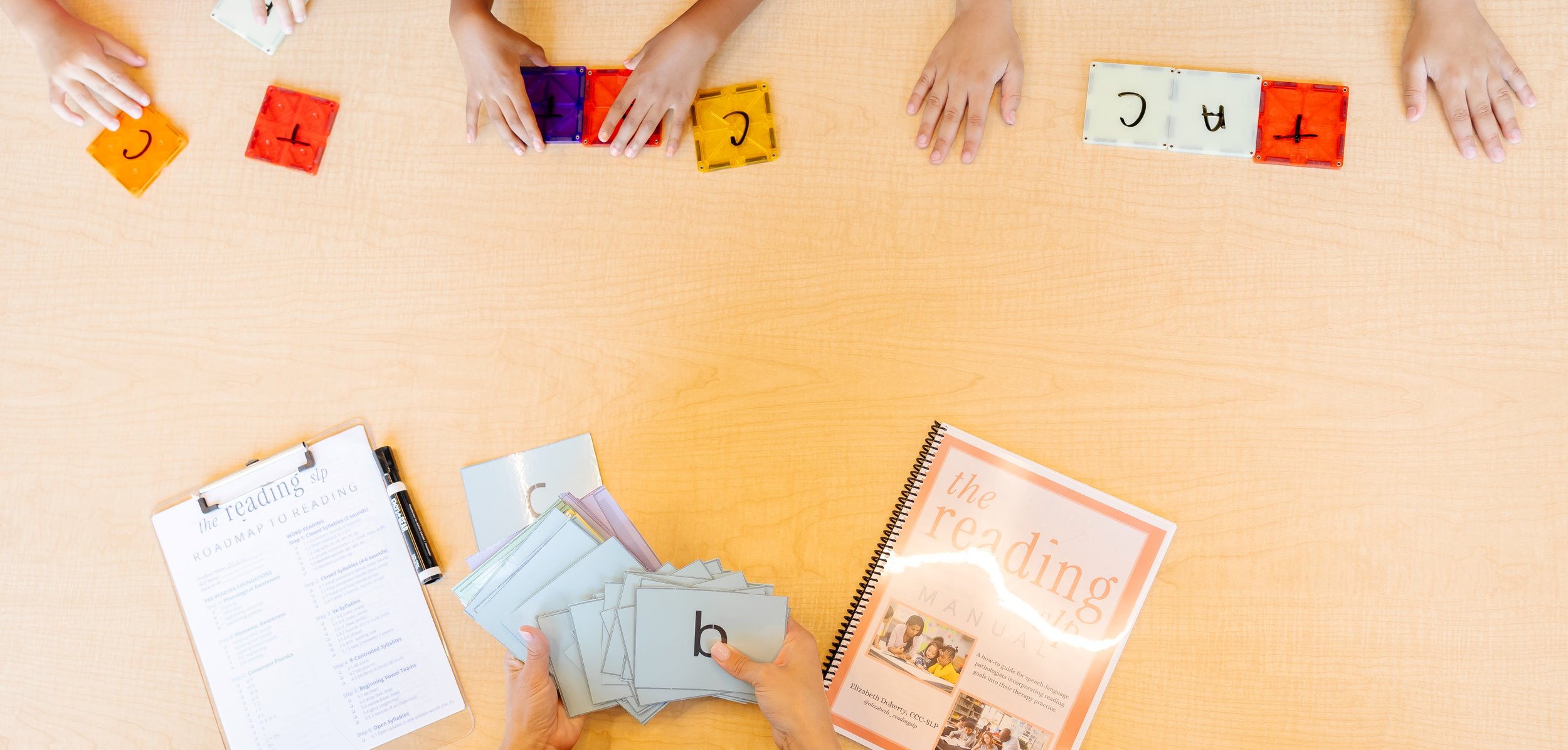
From there, sessions are built around the evidence-based strategies described in this post, tailored to where that specific child is right now. Parents are always brought into the process so that home practice feels clear and doable, not overwhelming.
We specialize in supporting neurodivergent learners, including children with dyslexia, language delays, and speech sound disorders that affect literacy. For these children especially, working with a licensed speech-language pathologist rather than a general reading tutor makes a real difference.
SLPs understand the connection between phonological processing, oral language, and reading in a way that goes beyond what most tutoring programs offer.
Sessions are available year-round, including summer. For many families, summer is when private reading intervention produces its biggest gains, because there are no competing school demands and your child can focus entirely on building skills before the next grade year begins.
You do not have to choose between what the school offers and doing nothing. Private reading intervention at Univie can run alongside school services, or fill the gap when your child does not qualify for school support but is clearly struggling.
Frequently Asked Questions About Reading Intervention Strategies
What reading intervention strategies work best for struggling readers?
The strategies with the strongest research support are phonemic awareness training, systematic phonics instruction, multisensory learning, repeated oral reading for fluency, vocabulary instruction in context, and explicit comprehension strategy teaching. The best approach depends on where a specific child's reading is breaking down.
What phonics intervention strategies should I use at home?
Focus on one phonics pattern at a time and practice it until it feels automatic before moving on. Use decodable books that are matched to the patterns your child has learned. Avoid asking your child to guess at words based on pictures, which is a habit that competes with phonics-based decoding.
How can I help my child with reading comprehension at home?
Make reading an active conversation rather than a performance. Ask your child what they think will happen before reading, check in during reading by asking what is going on, and talk about what happened after. Connecting what they read to things they already know makes comprehension much stronger.
How long should home reading practice be?
For most children receiving reading intervention, 10 to 15 minutes of focused home practice four to five days a week is more effective than longer, infrequent sessions. Consistency matters far more than duration. Short daily practice builds the automaticity that intervention targets.
What is the Orton-Gillingham approach to reading intervention?
Orton-Gillingham is a structured, multisensory approach to reading and spelling instruction developed specifically for students with dyslexia. It teaches phonics explicitly and sequentially, engages multiple senses at once, and is individualized to the learner. Many evidence-based reading intervention programs today are based on or inspired by Orton-Gillingham principles.
Can parents do reading intervention at home without a specialist?
Parents can absolutely support reading development at home using the strategies in this guide. However, if your child has significant reading difficulties, a language-based learning difference, or has not made progress despite home support, working with a trained reading specialist or speech-language pathologist will produce faster and more durable results. Home practice complements professional intervention.
You Are Already Doing More Than You Know!

The fact that you are reading this tells you something about the kind of parent you are. You are paying attention. You are looking for answers. You are willing to learn something new to help your child get to a place where reading feels possible instead of painful.
The strategies in this post are not complicated, but they are intentional. Use the ones that fit your child's current level. Follow your specialist's guidance. Keep showing up, even on the days when it feels like progress is slow.
Reading is not a race. With the right support and a parent who keeps showing up, the story changes.