Does Speech Therapy Help Children With Autism?
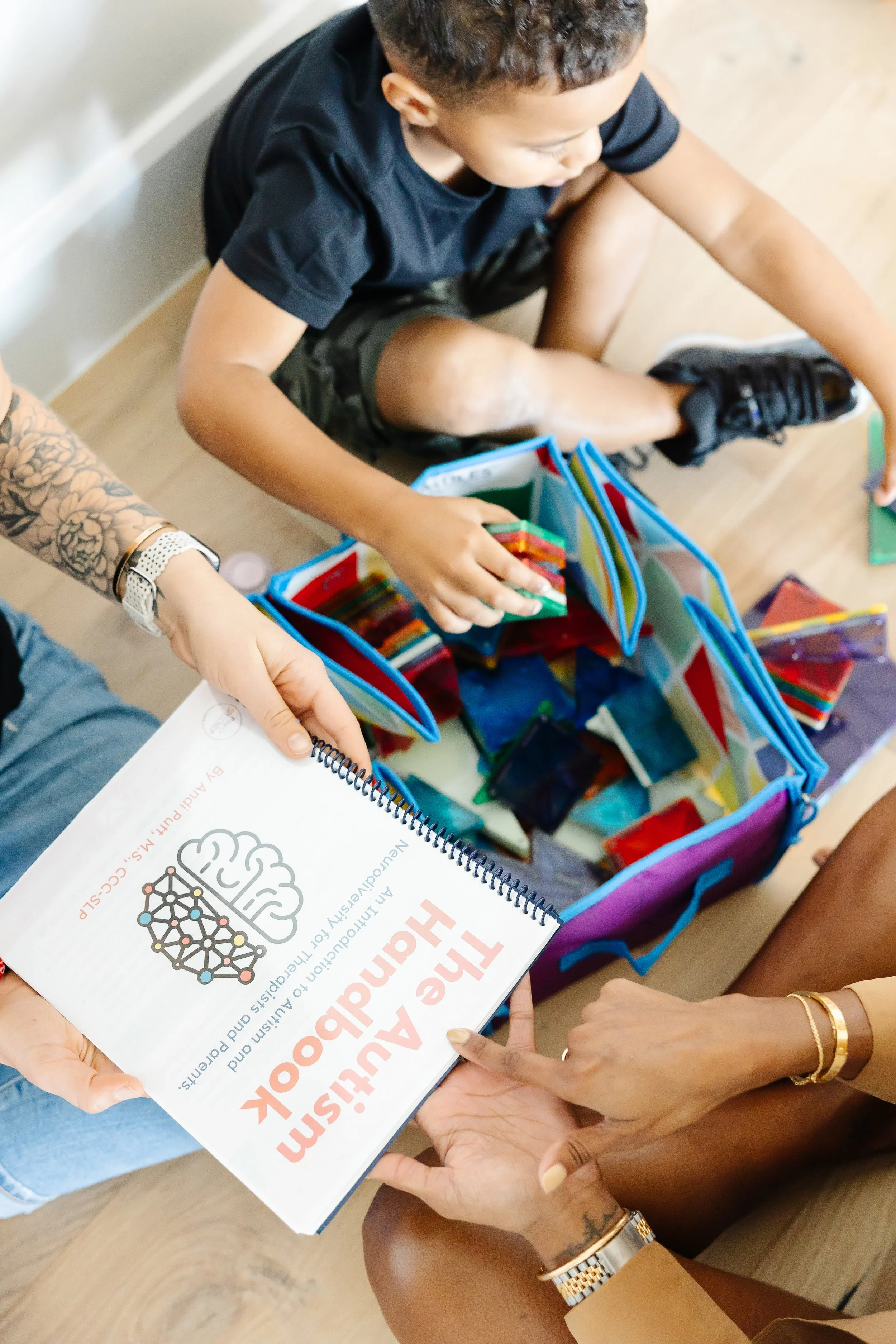
Children with autism communicate in many different ways.
Some use spoken language easily. Some use very little spoken language. Some rely on echolalia, gestures, signs, or communication devices. And many move between these depending on the situation.
Because of that, speech therapy for autism isn’t just one thing. Speech therapy can support many autistic children, but only when it’s grounded in an understanding that autism is a neurodevelopmental difference, not something caused by a lack of speech or language exposure. Autism isn’t “just a speech delay,” and communication support isn’t about correcting or removing autistic traits.
Supportive speech therapy focuses on access to communication, helping a child understand others, express themselves, and participate in daily life in ways that are meaningful to them. What that looks like will depend on the child, their needs, and how they naturally communicate.
This post breaks down how speech therapy can support autistic children, what helpful therapy looks like, and what to keep in mind when deciding whether speech therapy is the right support for your child.
Related: Check out our guide on pediatric speech therapy!
Autism and Communication Look Different for Every Child
Autism is a neurodevelopmental condition, which means it affects how a child experiences, processes, and interacts with the world, including how they communicate. Because of this, communication can look very different from one autistic child to another.
Some autistic children use a lot of spoken language but find social communication challenging. They may struggle with things like back-and-forth conversation, understanding implied meaning, or navigating social expectations. Others may use very few spoken words, especially early on, and communicate in other ways.
Many children use echolalia, repeating phrases they’ve heard as a meaningful form of communication. Others rely on gestures, signs, body language, pictures, or AAC (augmentative and alternative communication) to express themselves. Some children move between different communication styles depending on the environment, their energy level, or how regulated they feel.
This wide range of communication profiles is why there is no single version of autism speech therapy that works for every child. Effective autism spectrum speech therapy is individualized, flexible, and responsive to how each child naturally communicates, rather than trying to fit every child into the same approach.
Understanding this variability is key to choosing support that actually helps, rather than therapy that focuses on making communication look a certain way.
What Does Speech Therapy Help With for Autistic Children?
Speech therapy can support autistic children by improving access to communication, not by trying to normalize how communication looks. The goal is to help children communicate in ways that work for them and support their participation in daily life.
Depending on the child, speech therapy may help with:
Understanding and using language, including following directions, understanding questions, and making sense of spoken or visual language
Expressing wants, needs, thoughts, and emotions in ways that feel accessible and effective
Social communication, such as making peer connections that don't force scripted or performative interactions
Supporting alternative forms of communication, including AAC, signs, gestures, pictures, or a combination of systems
Reducing frustration by expanding how a child can communicate
Progress doesn’t always look like more words or longer sentences. Sometimes it looks like a child having more ways to be understood, fewer communication breakdowns, or greater confidence expressing themselves.
When speech therapy focuses on function and access, it supports communication that is meaningful.
Related: Caregiver & Me Classes - Sign up for our group sessions!
What Speech Therapy for Autism Is Not
Speech therapy for autism is often misunderstood, so it’s important to be clear about what supportive therapy is not meant to do.
Speech therapy does not:
Cure autism
Remove autistic traits
Force eye contact, scripted responses, or “masking” behaviors
Autism is not something to fix, and communication support should never be about teaching a child to hide who they are in order to appear more acceptable or “typical.”
Effective speech therapy is not about compliance, following directions on demand, performing social behaviors, or meeting external expectations. And it’s not about prioritizing how communication looks to others over whether it actually works for the child.
Instead, supportive therapy centers respect, autonomy, and access to communication. The focus is on helping a child be understood, express themselves, and participate in daily life in ways that feel safe and meaningful to them.
When therapy moves away from compliance and appearance, it creates space for real communication and real connection, to develop.
What Neurodiversity-Affirming Speech Therapy Looks Like
Neurodiversity-affirming speech therapy starts from the understanding that all forms of communication are valid, even when it doesn’t look typical. The goal isn’t to change how a child naturally communicates, but to support access, understanding, and participation.
This approach is child-led and respectful, meaning therapy follows the child’s interests, energy, and communication style rather than expecting the child to adapt to rigid expectations.
In practice, neurodiversity-affirming autism and speech therapy focuses on:
Communication access, so children have reliable ways to express themselves
Regulation and connection, recognizing that communication is closely tied to emotional and sensory needs
Meaningful participation in daily life, not performance during therapy sessions
Strategies may include:
Following the child’s interests to create real motivation for communication
Supporting echolalia and gestalt language processing as meaningful communication
Using AAC (augmentative and alternative communication) as a support tool (not a last resort)
Because no two autistic children communicate in the same way, this type of therapy is individualized and flexible. Support changes as the child’s needs change, and progress is defined by what helps the child communicate more effectively in their own life, not by how closely they match a checklist.
Does Every Autistic Child Need Speech Therapy?
No, not every autistic child needs speech therapy, and not every child benefits from it in the same way or at the same time.
Some children benefit most from speech therapy during certain stages, when communication challenges are causing frustration or limiting participation in daily life. Others may already have effective ways to communicate and may not need ongoing support right now.
Whether speech therapy is helpful often depends on things like:
A child’s communication needs and how well they’re able to express themselves
Their level of frustration related to communication
How communication differences impact daily routines, relationships, and participation
There isn’t a single right answer and there doesn’t need to be urgency or pressure to decide immediately. Caregivers know their child best, and trusting your instincts is an important part of choosing support.
Speech therapy should be a tool that serves the child and family, not something done just because it’s expected.
Related: How to get an IEP for speech therapy
How to Know If Speech Therapy Might Help Your Child
Speech therapy doesn’t require certainty. Many families seek support simply because communication feels harder than it needs to be.
Some signs parents often notice include:
Difficulty being understood, even by familiar adults
Frustration related to communication, such as meltdowns or withdrawal when needs aren’t met
Limited ways to express wants or needs, especially during moments of stress
You don’t need to wait until things feel “big,” and you don’t need to be sure that speech therapy is the right answer. If communication is impacting your child’s comfort, confidence, or daily life, it’s reasonable to explore support.
Seeking speech guidance is about understanding options, not committing to anything before you’re ready.
Speech Therapy Options in Illinois
Families in Illinois have different needs when it comes to speech therapy, especially when looking for support that respects autistic communication and focuses on meaningful outcomes.
UniVie Therapy Solutions offers neurodiversity-affirming pediatric speech therapy that centers communication access, connection, and participation, rather than compliance or masking.
Services are available in a few different ways:
In-person speech therapy in Springfield, IL and surrounding areas
Whether families are just beginning to explore speech therapy or looking for a more supportive approach, services are individualized to meet each child where they are.
If you’re unsure what kind of support might be helpful, reaching out for information or a conversation can be a helpful first step.
Supporting Communication Without Changing Who Your Child Is
All forms of communication are valid. Support does not mean fixing, correcting, or reshaping who your child is, it means making sure they have access to communication that works for them.
The goal of speech therapy isn’t perfection or performance. It’s connection, understanding, and participation in everyday life, being able to express needs, share experiences, and feel understood in ways that feel safe and meaningful.
If you’re exploring next steps, you don’t have to decide everything at once. Families can reach out to Early Intervention, school-based services, or UniVie Therapy Solutions for guidance and support along the way.

Hi, I’m Daj! Founder of UniVie Therapy
.
I started UniVie Therapy Solutions with one simple goal: to help individuals of all ages communicate with confidence! My work is grounded in personalized, evidence-based support that honors each person’s strengths, needs, and differences. Whether I’m working with children, families, caregivers, or individuals, my approach is always collaborative, affirming, and focused on real-life communication.
If you’d like to learn more or stay connected, here are a few helpful resources: