The Connection Between Speech Therapy and Reading
Most people think speech therapy is just for kids who have trouble talking and it's one of the most common misconceptions we hear as SLPs.
Reading is a language skill. That means the same professional helping your child form sounds, build vocabulary, and process language is also the most qualified person in the room when reading starts to break down.
If you're a parent or caregiver who's noticed your child avoids books, struggles to sound out words, or reads slowly despite trying hard, we’re breaking down what the connection between speech and reading looks like, and what to do about it below!
Before we dive in…
If you have specific questions about your child’s speech or reading concerns, Book a FREE discovery call with us here! We can chat about what might be best for your child.
Why Reading Is a Language Skill (not a visual one)

Reading is not a visual task, it's a language task.When a child looks at the word dog, their brain doesn't just recognize a shape. It has to do something much more complex:
Identify the individual letters
Map those letters to sounds (d, o, g)
Blend those sounds into a spoken word
Connect that spoken word to its meaning
Every single one of those steps is a language process and those steps are the domain of a speech-language pathologist.
This is why, when reading falls apart, it is almost always due to the language skills that develop long before a child ever holds a book.
Related: Does my child need a reading tutor?
The Foundation Comes Before the First Book: Oral Language Development
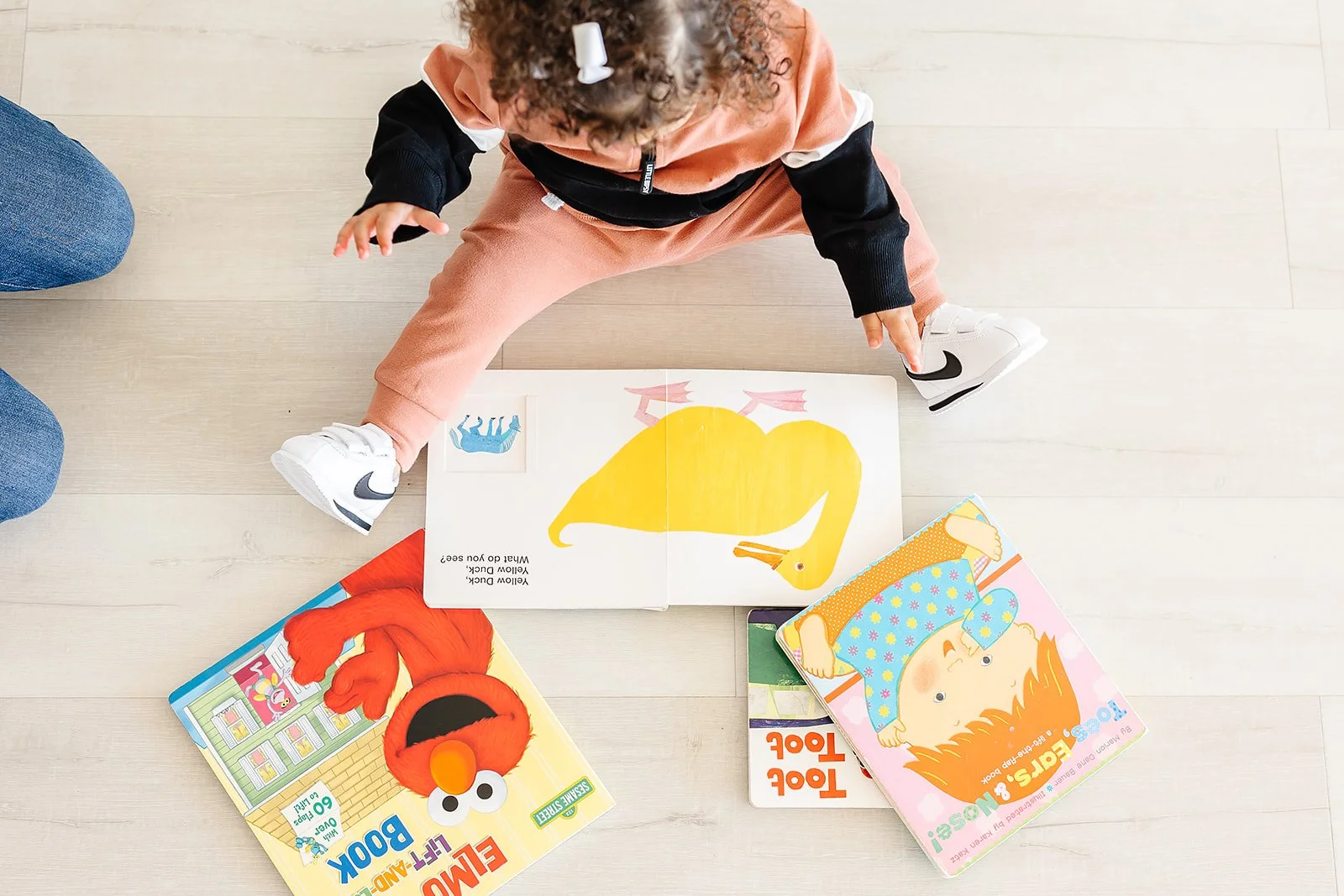
Long before a child learns to read, they are building the skills that reading will depend on.
Spoken language is the foundation of written language. A child who enters kindergarten with strong oral language skills (a rich vocabulary, the ability to follow multi-step directions, a sense of story structure, the ability to identify and play with sounds) has a significant head start over a child whose spoken language is still developing.
This is why speech therapy and reading are so deeply connected. When an SLP works with a toddler or preschooler on building vocabulary, expanding sentence length, or strengthening their understanding of language, they are also laying the groundwork for literacy.
The reverse is equally true. Children who come in for reading support often have underlying oral language gaps that were never identified or addressed.
Phonological Awareness: The Bridge Between Speaking and Reading
Phonological awareness is the ability to hear, identify, and manipulate the sounds within spoken language. It has nothing to do with letters, it's entirely about sound. It includes skills like:
Recognizing that cat and hat rhyme
Knowing that the word sunshine has two parts: sun and shine
Identifying that dog starts with the sound /d/
Blending the sounds /k/, /æ/, /t/ together to make cat
Deleting the first sound of smile to get mile
These skills develop in a predictable sequence, starting in the toddler years with rhyme and syllable awareness and building toward more advanced skills like phonemic awareness, which is the ability to work with individual sounds (phonemes) within words.
Phonemic awareness is a strong predictor of how well a child will learn to read. Phonemic awareness is a spoken language skill, which is exactly why SLPs are knowledgeable on it.
When a child comes to us with reading struggles, one of the first things we assess is their phonological awareness.
Are they able to blend sounds?
Can they identify the individual sounds in a word?
Can they manipulate those sounds?
The answers tell us a great deal about where the reading breakdown is happening and what kind of support will actually help.
Related: What is Gestalt Language Processing
What Is Phonics and How Is It Different from Phonological Awareness?
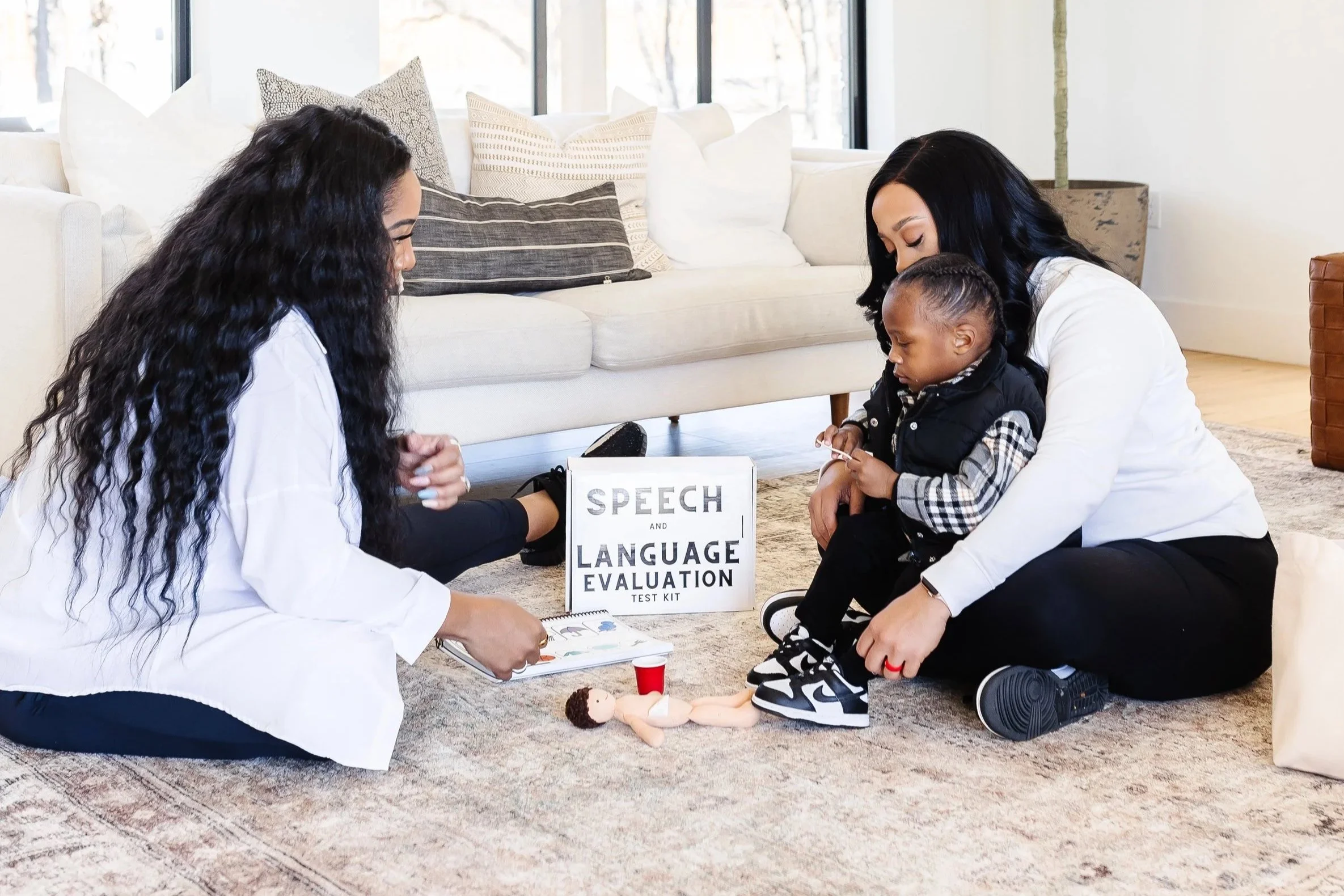
Parents often hear the words "phonological awareness" and "phonics" used interchangeably. They're related, but they're not the same thing, and understanding the difference matters.
Phonological awareness is about sound only. It exists entirely in the spoken world. No letters required.
Phonics is about the relationship between sounds and letters. It's what happens when a child learns that the letter b represents the sound /b/, or that sh together represents the sound /ʃ/. Phonics connects the spoken language knowledge a child already has to the written symbols on the page.
This is why phonological awareness has to come first. A child cannot learn to decode written words through phonics until they have a solid foundation of awareness of the sounds those letters represent. You can't map a symbol to a sound you don't yet know exists.
SLPs work at both levels, building phonological awareness as a spoken language skill, and then supporting the transition to phonics as that awareness is applied to print. This is a crucial part of what separates SLP-led reading intervention from general tutoring.
How Speech Sound Disorders Affect Reading
Children who have or had a speech sound disorder, difficulty producing certain sounds accurately, are at a significantly elevated risk for reading difficulties.
This surprises many parents, especially when their child's speech has improved or resolved.
When a child has difficulty producing certain speech sounds, it often reflects a broader difficulty with the way sounds are represented and processed in the brain.That internal representation matters enormously for reading, because reading requires precise, accurate mental representations of sounds in order to decode words accurately.
A child who produces wabbit for rabbit isn't just having trouble with their mouth. Their brain may be representing that sound differently and when they try to read and spell words containing that sound, those imprecise representations can create errors that look like reading problems but are actually rooted in phonology.
This is one of the reasons that children with a history of speech sound disorders should be monitored carefully for reading difficulties, even after their speech sounds are corrected.
It's one of the reasons that an SLP, who understands this connection deeply, is the right person to provide both support.
Signs Speech Therapy Might Be the Missing Piece for Your Child's Reading

Here's a list of signs that the connection between speech, language, and reading might be at the heart of your child’s struggle:
In preschool and kindergarten:
Difficulty learning the alphabet or letter sounds
Trouble rhyming or noticing when words sound the same
Late talker or limited vocabulary compared to peers
History of speech therapy for speech sound errors
Difficulty following multi-step directions
In early elementary (grades 1–2):
Reads slowly and without fluency
Decodes the same word differently each time it appears
Consistently confuses letters with similar presentations (b/d, p/q)
Makes spelling errors that suggest sound confusion (writes brane for brain)
Reading comprehension is significantly lower than listening comprehension
In later elementary (grades 3+):
Can decode words but struggles to understand what's been read
Word retrieval difficulties, knows a word but can't quite pull it up
Struggles with the vocabulary demands of content-area subjects (science, social studies)
Has a history of speech or language services but never received reading support
Was "discharged" from speech therapy but continues to underperform academically
If several of these resonate, a speech-language evaluation, not just a reading assessment, may give you the most complete picture of what's happening and why.
Why an SLP Is the Most Qualified Professional for Reading Intervention
When a child struggles with reading, the typical first step is a reading tutor and while tutors can provide valuable support, there's a meaningful gap between what a general reading tutor can offer and what a licensed SLP brings to the work.
Here's why the distinction matters:
SLPs are trained in the full language system. We understand not just phonics and decoding, but phonological processing, vocabulary development, morphology (the meaning structure of words), syntax, and discourse, all of which contribute to reading.
SLPs can identify the root cause. A child who struggles to read may have a phonological processing deficit, a vocabulary gap, an oral language delay, a history of speech sound errors, or some combination of all of these. An SLP can assess all of these areas and build a plan that addresses the actual source of the difficulty,not just the surface symptoms.
SLPs are trained in neurodivergent learning profiles. Children with autism, ADHD, dyslexia, childhood apraxia of speech, and language-based learning disabilities have reading needs that require specialized knowledge. SLPs are trained to understand these profiles and adapt intervention accordingly.
SLPs can connect the dots across domains. When I work with a child on reading, I'm not siloing that work from their speech, language, and communication development. Everything is connected. A child whose reading struggles are rooted in phonological processing may also have residual speech sound errors, word retrieval difficulties, and comprehension challenges that all need to be addressed together.
At UniVie Therapy Solutions, every reading session is led by a licensed SLP, not a general reading tutor or a paraprofessional using a scripted program. That means your child gets a specialist who can see the whole picture, respond clinically to what they observe, and adapt in real time.
What SLP-Led Reading Support Actually Looks Like

Here's what you can expect when an SLP provides reading intervention:
Assessment first. Before any intervention begins, a thorough assessment identifies exactly where the reading breakdown is happening. This isn't just a reading level test. It includes phonological awareness skills, phonics knowledge, fluency, vocabulary, comprehension, oral language and speech sound production. The results drive every session that follows.
A plan built around your child. There's no single reading program that works for every child. The intervention plan is built around what your child specifically needs, not what a curriculum dictates.
Structured literacy approaches. Sessions are grounded in the science of reading: explicit, systematic, sequential instruction that builds the code-breaking and meaning-making skills of reading from the ground up. This includes multisensory techniques for children who need to see, hear, and feel the language they're learning.
Progress monitoring. Skills are tracked regularly so the plan can adjust as your child grows. You'll know what's working, what's been mastered, and what the next step is.
Parent involvement. Reading intervention doesn't start and end at the session. Families receive practical, specific guidance on how to extend the work at home, in ways that feel natural and doable, not like extra homework.
How We Support Children With Reading and Speech Therapy in Springfield, IL

At UniVie Therapy Solutions, we've built our practice around the belief that reading support and speech therapy belong together.
We serve children in Springfield, Chatham, and surrounding Illinois communities. Our sessions are mobile, meaning we come to your home or your child's school/daycare, because children learn best in the environments where they actually live and grow.
Our reading intervention services are led by Daj Mitchell, a licensed and ASHA-certified speech-language pathologist with specialized expertise in dyslexia, childhood apraxia of speech, AAC, and language-based learning differences. Every plan begins with a comprehensive assessment and is built around your child's specific profile.
We're neurodiversity-affirming, strengths-based, family-focused and don't believe in a one-size-fits-all approach.
If your child is struggling with reading, and you're not sure whether speech therapy is the right direction, a discovery call is a great first step! We'll listen, we'll answer your questions, and we'll help you figure out what kind of support makes the most sense.
Frequently Asked Questions
Can a speech therapist help with reading? Yes and in many cases, a speech-language pathologist is the most appropriate specialist for reading intervention. SLPs are trained in phonological processing, oral language development, and the language foundations of literacy, making them uniquely qualified to address reading difficulties, especially those rooted in phonological, vocabulary, or language-based causes.
What does speech therapy have to do with reading? Reading is a language skill, and language is the domain of speech-language pathologists. The ability to decode written words depends on phonological awareness and phonics, both of which are rooted in spoken language. The ability to comprehend what's read depends on vocabulary and oral language, which SLPs also address. The overlap is deep and direct.
My child had speech therapy as a toddler. Does that affect their reading? It can. Children with a history of speech sound disorders are at elevated risk for reading difficulties. The underlying phonological processing differences that contributed to the speech errors can also affect reading and spelling. If your child had speech therapy, it's worth having their reading and phonological skills monitored.
What is the difference between phonological awareness and phonics? Phonological awareness is awareness of sounds in spoken language, entirely separate from print. Phonics is the relationship between those sounds and written letters. Phonological awareness must develop first; phonics instruction builds on it by connecting sounds to their written representations.
At what age should a child start reading intervention? An effective window is before third grade, when the brain is receptive to reading instruction. Preschool and kindergarten-age intervention targeting phonological awareness can prevent reading difficulties before they fully emerge. If you have concerns at any age, don't wait, progress is possible at every stage, but it's easiest when intervention begins early.
Does UniVie offer reading support for children with dyslexia? Yes. UniVie provides dyslexia-informed reading intervention using structured literacy approaches grounded in the science of reading. Our services are designed for neurodivergent learners, including children with dyslexia, language-based learning differences, and complex profiles.
UniVie Therapy Solutions provides mobile speech therapy and SLP-led reading intervention for children in Springfield, Chatham, and surrounding Illinois communities. Virtual services are available across Illinois. Contact us to learn more.