Speech Milestones by Age: A Complete Guide for Parents (Birth to Age 5+)
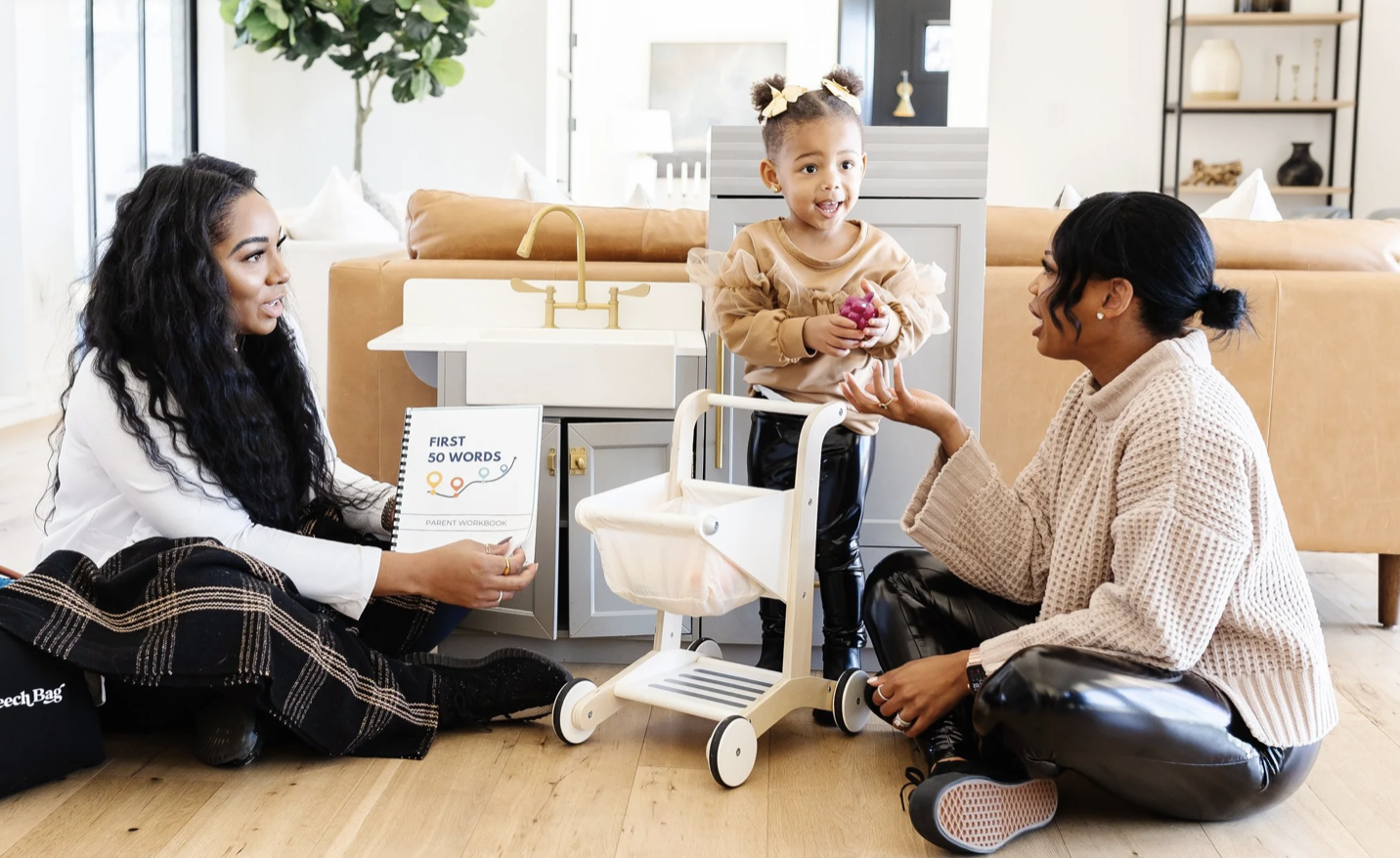
Every child develops speech and language skills at their own pace, but there are general milestones that can help you understand what’s typical at different ages.
From first sounds and babbling to full conversations, these speech milestones give parents a helpful roadmap for tracking communication development from birth through age 5 and beyond.
In this guide, we’ll break down common speech and language milestones by age, what skills to look for, and when it may be helpful to seek additional support.
Whether your child is just starting to coo or learning to tell stories, understanding these stages can help you feel more confident in supporting their communication growth.
Have specific questions about your child’s speech? Schedule a FREE discovery call to see if speech therapy is right for you!
Before the Milestones: What Speech and Language Are
Parents often use "speech" and "language" to mean the same thing. They're actually two distinct skill sets and the difference matters to understanding your child's development.
Speech is the physical production of sound. It's articulation, how clearly your child says individual sounds and words. When we talk about whether a 2-year-old should be saying the /p/ sound, that's a speech question.
Language is the system of meaning. It includes:
Receptive language: what your child understands: following directions, responding to questions, grasping vocabulary
Expressive language: what your child communicates: words, sentences, questions, stories
Pragmatic language: how your child uses language in social interactions
A child can have strong speech clarity but real language delays, or robust expressive language but speech sound errors. Milestones look at both and a thorough evaluation always assesses both.
One more important note before we dive in: milestones describe a range, not a deadline. The ages below represent when most children, roughly 75 to 90 percent, have achieved a given skill.
Early and late are both normal within a range. What matters is the pattern over time, not a single snapshot.
Related: View pediatric speech services at Univie!
Birth to 3 Months Speech Milestones
Most parents don't think of a newborn as a communicator but your baby has been hearing your voice since the third trimester and they arrive ready to connect.
What You'll Typically See
Hearing and understanding:
Startles or blinks at sudden loud sounds
Quiets or turns toward familiar voices, especially a parent's voice
Responds differently to soothing versus alarming tones
Appears to recognize your face and voice together
Vocalization and expression:
Cries are the primary communication tool and they're already differentiated. A hunger cry sounds different from a pain cry or an overtired cry. You'll start to learn the difference.
Produces soft cooing sounds, often in response to your voice or face
Makes small mouth movements during quiet alert states
Smiles socially (around 6–8 weeks)
What This Stage Is Building
The back-and-forth of early cooing and responding is the very first foundation of conversation. When you talk to your baby and they coo back, and you respond, that turn-taking is the blueprint for everything that follows.
When to Talk to Your Pediatrician
Your baby doesn't startle at loud sounds
Your baby doesn't make any sounds other than crying by 2 months
Your baby doesn't seem to respond to your voice at all
Related: The connection between reading and speech
4 to 6 Months Speech Milestones: Babbling Begins
This is one of my favorite stages to talk about with parents, because the changes are dramatic and delightful and deeply meaningful for development.
What You'll Typically See
Hearing and understanding:
Turns eyes or head toward new sounds
Responds to their own name with a look or pause
Notices and reacts to music
Responds to changes in tone, your excited voice produces a different response than your concerned one
Vocalization and expression:
Babbling begins: consonant-vowel combinations like "ba," "ma," "da," "pa"
Vocalizes during play, both alone and with caregivers
Laughs and squeals with pleasure
Uses different sounds to express different states, separate vocalizations for happy, frustrated, wanting attention
What This Stage Is Building
Babbling is not random noise. It’s your baby practicing the motor patterns of speech, the movement of lips, tongue, and jaw to produce intentional sounds. The sounds they practice now are the sounds that will become words later. Babbling is speech rehearsal.
Limited babble or a limited range of sounds can be an early indicator of speech sound difficulties, hearing concerns or language delays and early is always the best time to catch them.
When to Talk to Your Pediatrician
Your baby doesn't babble at all by 6 months
Your baby doesn't respond to sounds or to their name
Babbling stopped after it had started (regression always warrants attention)
7 to 12 Months Speech Milestones: First Words on the Horizon
The second half of the first year is when everything tends to accelerate. This is where joint attention, the shared focus on an object between your child and another person, emerges fully and it is one of the most important communication milestones there is.
What You'll Typically See
Hearing and understanding:
Looks where you point
Responds to simple words and phrases: "no," "bye-bye," "come here," their own name
Understands the names of familiar people and objects
Enjoys being read to; reaches for the book, turns pages
Vocalization and expression:
Babble becomes longer and more varied: "bababababa," "mamama," "dadadada"
Imitates sounds, facial expressions, and simple actions
Uses sounds and gestures to communicate wants, pointing, reaching, showing
First words typically emerge between 10 and 14 months, "mama," "dada," "uh-oh," "more"
Waves bye-bye, claps, plays pat-a-cake
The Importance of Joint Attention
Around 9 months, most children begin to point, not just to reach for what they want, but to also share something interesting with you. A child who points at a dog because they want you to look at the dog too is demonstrating joint attention: the understanding that two people can share focus on the same thing. This is one of the foundational skills for both language and social development. If pointing doesn't emerge by 12 months, it's worth noting.
When to Talk to Your Pediatrician
No babbling by 9 months
No first words by 12-15 months
No pointing, waving, or other gestures by 12 months
Doesn't look where you point
Loss of skills that had previously been present
12 to 18 Months Speech Milestones: The Word Growth Begins
This is the stage most parents are watching closely and the one that generates the most questions in my practice.
What You'll Typically See
Hearing and understanding:
Understands and follows simple one-step directions: "Get your shoes," "Give me the ball"
Points to pictures in books when named
Identifies familiar people and several body parts when asked
Understands "no" consistently
Vocalization and expression:
Vocabulary grows from around 3–5 words at 12 months to 10–20 words by 18 months
Uses words more consistently, says a word not just once but reliably, in appropriate situations
Combines words with gestures to communicate: points to cup and says "more"
Imitates new words heard in conversation
Asks for things using words or clear approximations
What Counts as a Word?
Parents sometimes wonder whether a consistent approximation counts. Yes, it does. If your child always says "ba" for ball, and uses it consistently to refer to a ball, that counts as a word. Words don't have to be adult-accurate at this stage. What matters is that they're used intentionally and consistently to refer to something specific.
The 15-Month Check-In
Fifteen months is typically a milestone point that pediatricians look at closely. By 15 months, most children have 5-10 words, are pointing to communicate, and are following simple instructions. If a child at 15 months has fewer than 5 words and isn't using gestures to communicate, that's worth discussing with a professional, not panicking over, but not ignoring either.
When to Talk to Your Pediatrician or an SLP
Fewer than 10 words by 18 months
Not following simple directions
Not pointing to share attention (not just to request)
Loss of words previously used
Not imitating words or sounds
Have specific questions? Sign up for a 1:1 60 minute caregiver coaching session!
18 to 24 Months Speech Milestones: Two-Word Combinations and Vocabulary Growth
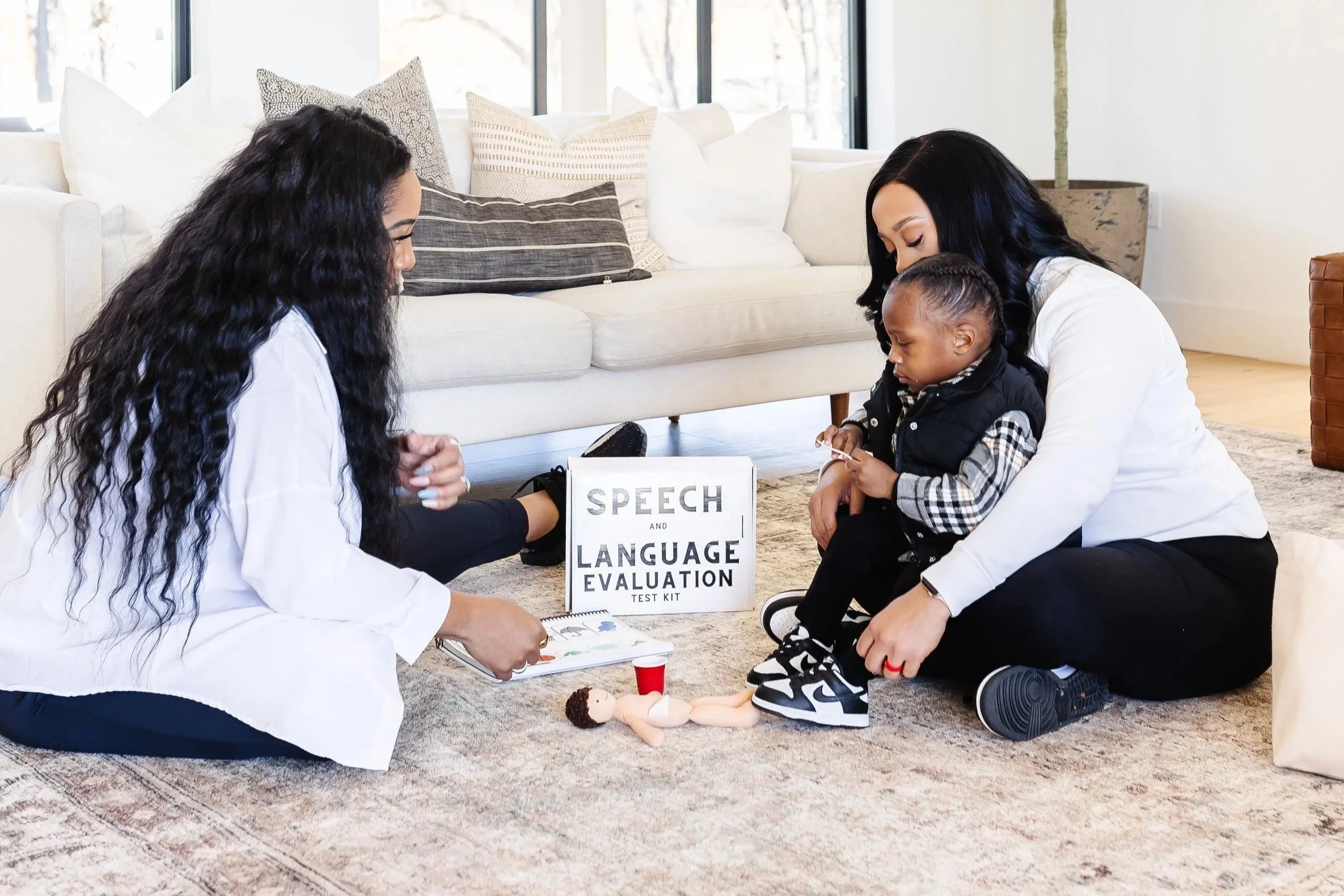
This period is one of the most active in all of language development. Between 18 and 24 months, most children go from single words to two-word phrases and vocabulary can grow by several new words per week.
What You'll Typically See
Hearing and understanding:
Follows two-step related directions: "Get your shoes and put them by the door"
Points to pictures, body parts, and objects when named
Understands basic question words: "where" questions, "what" questions
Listens to short simple stories with pictures
Vocalization and expression:
Vocabulary of approximately 50 words by 24 months
Two-word combinations emerge: "more juice," "daddy go," "big dog," "no more," "my turn"
Asks simple questions: "What's that?" "Where go?"
Names familiar pictures in books
Refers to themselves by name
Speech intelligibility: Parents and caregivers understand roughly 50% of what the child says; strangers understand less
The 50-Word Mark
Fifty words by age 2 is one of the most closely watched milestones in early childhood speech development and one of the most misunderstood. It doesn't mean 50 perfectly pronounced words, it means 50 words used intentionally and consistently to communicate. Animal sounds count and consistent approximations count. The important question is: how many things is my child communicating about?
Children who have fewer than 50 words and are not yet combining words at 24 months are considered late talkers. Some late talkers catch up on their own. Some don’t. An evaluation at this point, not a wait-and-see approach, is the right next step.
When to Talk to Your Pediatrician or an SLP
Fewer than 50 words by 24 months
Not yet combining two words
Speech is very difficult to understand even for parents
Not following two-step instructions
Difficulty with back-and-forth conversation, even at a simple level
Related: How to get an IEP for speech therapy for your child
2 Years Old Speech Milestones (24 to 30 Months): Language Grows in Complexity
What You'll Typically See
Hearing and understanding:
Understands concepts of quantity: "more," "a little," "a lot"
Identifies objects by their function: "What do you eat with?"
Understands pronouns: me, you, him, her
Follows two-step unrelated directions
Vocalization and expression:
Two- to three-word phrases are becoming consistent
Beginning to use pronouns: "me," "mine," "I," "you" often mixed up at first
Vocabulary continues to expand rapidly, new words almost daily
Asks lots of "what" and "where" questions
Uses words to express feelings and protest
Speech intelligibility: Familiar caregivers understand about 50–75% of speech; strangers less
What to Watch at This Stage
Two-three is often described as the "language burst" stage and this is accurate for most children. If your child's vocabulary seems to have plateaued, that pattern is worth noting. It's also worth watching whether your child uses language socially, not just to request things, but to share experiences, comment on the world, and connect with others.
3 Years Old Speech Milestones: Sentences, Stories, and Strangers Understand
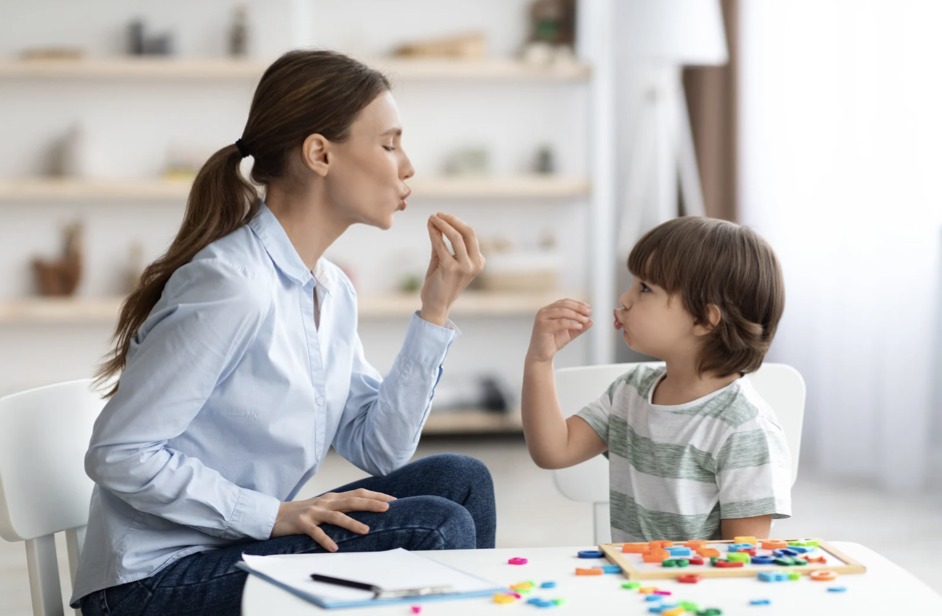
The jump from 2 to 3 is remarkable. Three-year-olds are conversationalists and have opinions. They may ask relentless questions and for the most part, people outside the family can understand what they're saying.
What You'll Typically See
Hearing and understanding:
Understands "who," "what," and "where" questions
Follows three-step directions
Understands concepts of time: "later," "soon," "yesterday"
Listens to and retells simple stories
Vocalization and expression:
Sentences of 3-4 words are typical; many children are producing longer sentences
Grammar begins to emerge: past tense "-ed," plural "-s," possessive "'s," present progressive "-ing"
Uses "because" to explain reasoning: "I fell because I tripped"
Asks "why" frequently and yes, it's developmentally appropriate
Can retell simple events from their day
Speech intelligibility: Strangers understand approximately 75% of speech; some sounds still in development
Speech Sounds at Age 3
Not all sounds are expected to be mastered at 3. The earliest sounds to develop, /p/, /b/, /m/, /n/, /h/, /w/ are typically in place. The later-developing sounds like /l/, /r/, /s/, /z/, /sh/, /th/ are still in progress. Errors on later-developing sounds at age 3 are normal. Errors on early sounds should be addressed.
When to Talk to an SLP
Strangers can't understand much of what your child says
Sentences are still only 1-2 words
Your child isn't using any grammar, everything sounds like a list of words
Frequent repetition of words or sounds (potential stuttering) that's been present for several months
Very limited vocabulary for their age
Related: What is reading intervention?
4 Years Old Speech Milestones: Grammar Locks In, Storytelling Emerges
Four-year-olds are prolific communicators. They're beginning to understand that words can have multiple meanings, that you can say one thing and mean another (hello, sarcasm, well, almost), and that stories have a beginning, middle, and end.
What You'll Typically See
Hearing and understanding:
Understands most of what is said in daily conversation
Follows complex multi-step directions
Understands concepts of time, quantity, size, and comparison
Enjoys more complex stories and can answer questions about them
Vocalization and expression:
Sentences of 4-6 words or more; grammar is mostly correct
Uses past and future tense with increasing accuracy
Tells stories with a logical sequence of events
Engages in back-and-forth conversation on a topic for multiple turns
Asks many "why" and "how" questions and genuinely wants answers
Speech intelligibility: Most of what they say is understood by strangers; errors on later sounds (/r/, /l/, /th/, /s/) is still considered typical
Narrative Skills: The Hidden Milestone
Most parents know to watch word count and sentence length. Fewer know to watch narrative structure, whether your child can tell a story with a beginning, a problem, a resolution, and an ending. By age 4, this is emerging. Narrative skills are directly predictive of reading comprehension and academic success. An SLP evaluating a 4-year-old is looking at this closely.
When to Talk to an SLP
Strangers still can't understand most of what your child says
Grammar errors are frequent and consistent across all sentence types
Your child has difficulty staying on topic in conversation
Stories are confusing or lack logical sequence
You're still hearing early sounds (/p/, /b/, /m/) said incorrectly
5 Years Old Speech Milestone and Beyond: School-Ready Communication
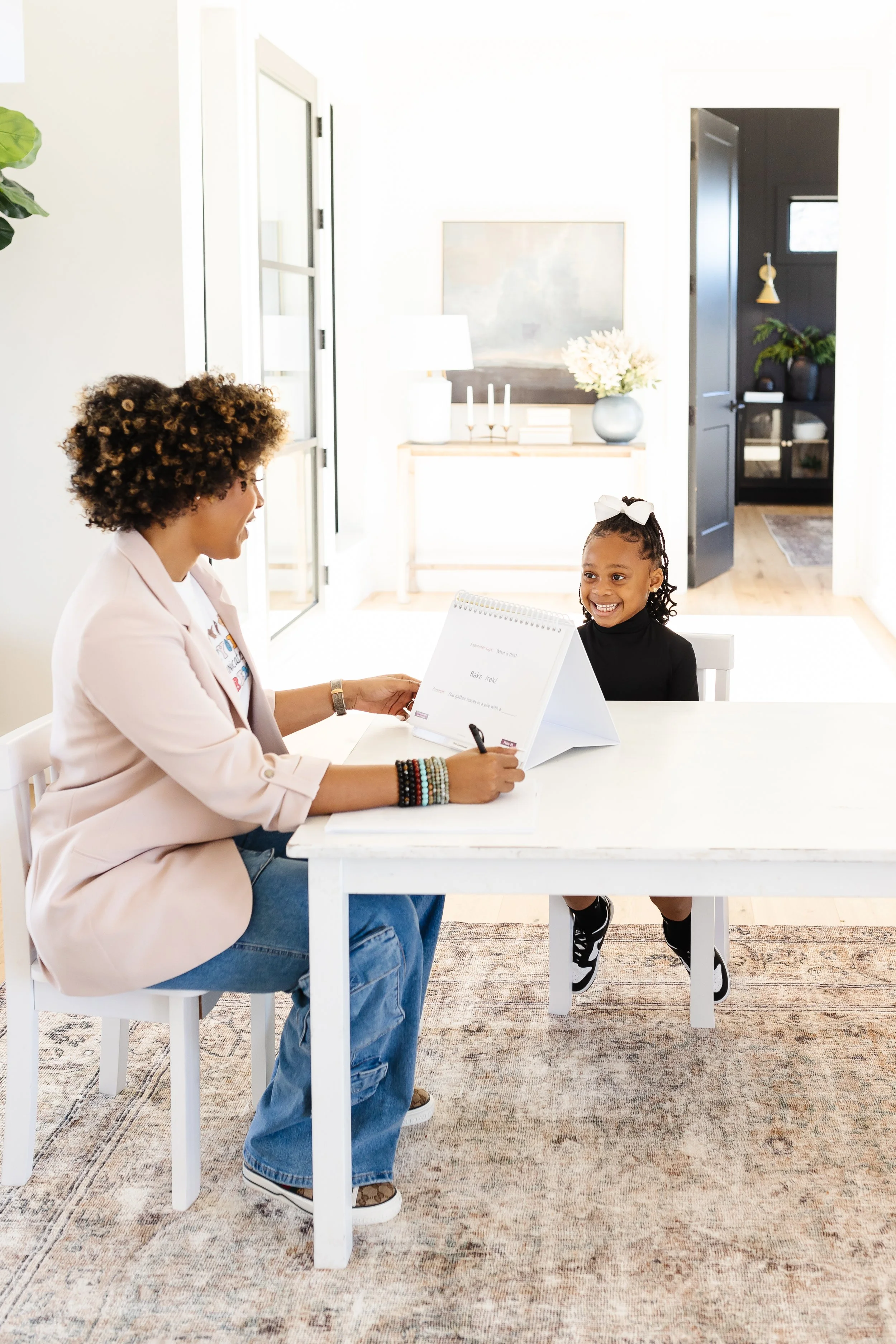
By kindergarten, most children are fully functional conversationalists. They can talk about the past and future, explain their thinking, negotiate with peers, and engage with books and stories in meaningful ways.
What You'll Typically See
Hearing and understanding:
Understands most complex sentences
Follows multi-step directions with ease
Can identify absurdity: "That doesn't make sense!"
Understands story structure and can predict what might happen next
Vocalization and expression:
Sentences are long, grammatically complex, and mostly correct
Uses most speech sounds correctly; /r/, /l/, /th/ may still be developing
Tells detailed, sequential stories with clear narrative structure
Adjusts communication style for different audiences (talks differently to a baby vs. a peer vs. a teacher)
Engages in real conversations, maintaining a topic, taking turns, adding new information
Speech Sounds at Age 5 and Beyond
Here's a quick reference for when sounds should be mastered (meaning most children produce them correctly by this age):
Age
Sounds Typically Mastered
By age 3
/p/, /b/, /m/, /n/, /h/, /w/
By age 4
/t/, /d/, /k/, /g/, /f/, /y/
By age 5
/l/, /sh/, /ch/, /j/
By age 6
/s/, /z/, /v/
By age 7–8
/r/, /th/ (both forms)
If your child has errors on sounds that should be mastered for their age, that's worth an SLP evaluation. Targeted intervention works best when it starts early.
Very Important for Every Parent to Know
Most of what's described above represents variability, the natural range of typical development. However, some patterns are worth acting on promptly, regardless of age.
Regression
Any time a child loses skills they previously had, stops using words, stops babbling, stops engaging in back-and-forth communication, that loss warrants immediate evaluation. Regression is not part of development. It can sometimes follow a stressor (a new sibling, illness, a major change), but it should always be assessed.
Very Limited Social Communication
Language is first and foremost social. If your child produces sounds or words but rarely uses them to connect with other people, doesn't seek to share experiences with you, doesn't point to show you things, doesn't respond when you call their name, those social communication patterns are important regardless of how many words they have. This is something an SLP evaluates in the context of a full assessment.
What to Do If You Have Concerns
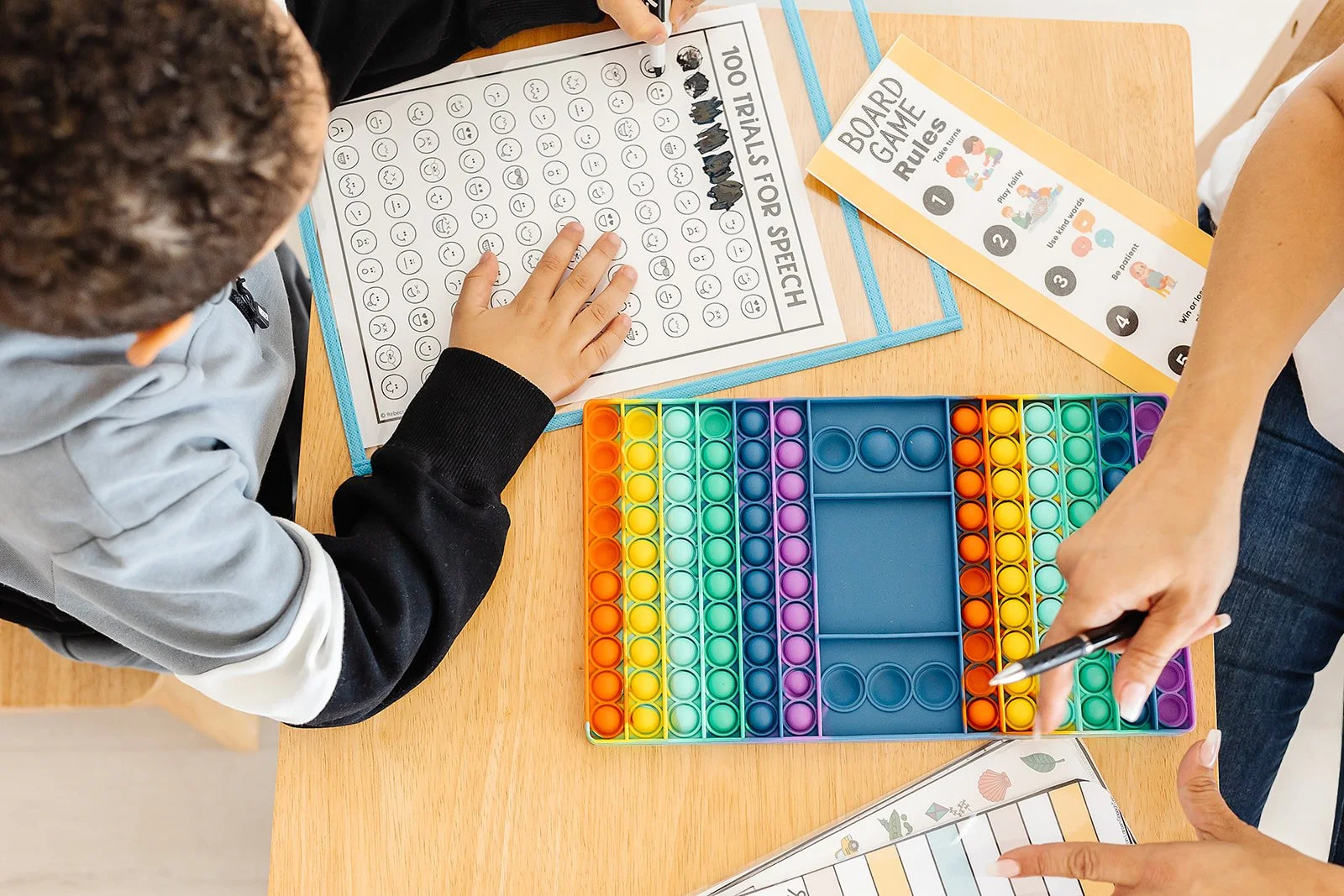
Trust your gut, and don't wait.
The research is clear that early intervention produces better outcomes than waiting. The window between birth and age 5 is a critical period for language development when the brain is most ready to build these skills.
That doesn't mean a child outside that window can't make progress; it absolutely does. It means that early is better, and that waiting to see if a child "catches up on their own" carries real risk.
You don't always need a referral to reach out to an SLP, and you don't need your child to fail a screening. If something is nagging at you, that instinct is worth following!
Here are some concrete steps:
Step 1: Note what you're observing. Before any evaluation, write down what you're noticing specific examples of what your child says, what they seem to understand, how they communicate. This context is enormously helpful for a clinician.
Step 2: Talk to your pediatrician. Your child's doctor can provide a referral if needed and can rule out hearing concerns (hearing loss is one of the most common causes of speech and language delays and is always worth checking).
Step 3: Request an evaluation. An SLP evaluation gives you a complete picture, not just whether your child is delayed, but where specifically the gaps are and what kind of support is most likely to help. For children birth to age 3, early intervention services through your state may be available at no cost.
Speech Milestones and Neurodivergent Children: A Note
These milestones describe typical development in neurotypical children. Neurodivergent children, those with autism, ADHD, sensory processing differences, gestalt language processing, or chromosomal differences, often have developmental profiles that don't fit neatly into these timelines.
That doesn't mean milestones are useless for neurodivergent kids. It means they're one data point rather than the whole story. An SLP working with a neurodivergent child looks at the full communication profile, strengths alongside gaps, the way the child learns, and what kind of support will actually work for them, not just whether they hit the chart at the right time.
At UniVie, we are neurodiversity-affirming, which means we see your child's full profile, build on their strengths, and never apply a one-size-fits-all approach.
How UniVie Supports Families in Springfield, IL and Surrounding Areas

If you're reading this and recognizing your child in one of these milestone sections or if you're just not sure, UniVie Therapy Solutions is here to help you figure out the next step.
We're a mobile, private-pay speech therapy practice serving children in Springfield, Chatham, and surrounding Illinois communities. That means we come to you, to your home, your child's school, or their daycare because children communicate best in the places where they actually live.
Every family starts with a 15-minute discovery call. We'll listen to what you're observing, answer your questions honestly, and help you understand whether an evaluation makes sense for your child. If it does, we'll conduct a thorough assessment that looks at the full speech and language picture and build a plan from there.
We specialize in:
Speech sound disorders and childhood apraxia of speech (CAS)
Language delays and developmental language disorder
Autism and gestalt language processing
Dyslexia and reading intervention
AAC (augmentative and alternative communication)
Frequently Asked Questions About Speech Milestones
What are the most important speech milestones to watch for? A few that deserve particular attention: first words by 12-15 months, two-word combinations by 24 months, 50 words in their vocabulary by age 2, and speech that's largely understandable to strangers by age 4. Pointing by 12 months and back-and-forth communication (turn-taking) are also critical early markers.
My child understands everything but doesn't talk much. Should I be worried? Strong receptive language (understanding) is a good sign. However, expressive language, communicating back, still needs to develop on its own timeline. A child who understands well but speaks very little is worth evaluating, because the pattern is important even when comprehension is strong. Some children are "quiet observers" by temperament; others have expressive delays that benefit from targeted support.
My son is 2 and barely talking. His older sister talked early. Is there a gender difference? There is a well-documented tendency for girls to reach some language milestones slightly earlier than boys, on average. However, this difference is much smaller than parents often assume, and it doesn't explain significant delays. A 2-year-old boy with fewer than 50 words and no two-word combinations should be evaluated regardless of what his sister did at the same age.
What is the difference between a speech delay and a language delay? A speech delay refers to difficulty with the production of sounds and words, the physical act of speaking. A language delay refers to difficulty with understanding and/or using the system of communication, vocabulary, grammar, sentence structure, comprehension. A child can have one, both, or neither. That's exactly what a full SLP evaluation determines.
My child's pediatrician said to "wait and see." What should I do? "Wait and see" is still common advice in pediatric offices, but the research increasingly does not support it for children showing clear signs of delay. The risk of waiting is real: language builds on language, and a gap that's small at 18 months can be significantly larger by 3 years if it's not addressed. If your gut is telling you something is off, requesting an evaluation is always a reasonable step and it can either give you reassurance or catch something early when intervention is most effective.
Does bilingual exposure cause speech delays? No. Bilingual and multilingual children are learning two (or more) language systems simultaneously, which can result in smaller vocabularies in each individual language early on, but their total vocabulary across languages is typically on par with monolingual peers. Bilingual exposure does not cause speech delays. If you have concerns about a bilingual child, the evaluation should account for both languages, and an SLP experienced with multilingual families is ideal.
How many words should a 2-year-old have? Most children have approximately 50 words by 24 months and are beginning to combine two words together. Words include consistent approximations and even animal sounds, they don't have to be perfectly pronounced adult words.
What should a 3-year-old be saying? By age 3, most children are using 3-4 word sentences, asking lots of questions, and using basic grammar (plurals, past tense). Strangers should be able to understand about 75% of what they say.
UniVie Therapy Solutions provides mobile speech therapy and SLP-led reading intervention for children in Springfield, Chatham, and surrounding Illinois communities. Virtual services are available across Illinois. To learn more or schedule a discovery call, visit univietherapy.com/contact.
Related reading from the UniVie blog: