Does My Child Need Speech Therapy? Signs, Ages, and What to Do Next

Speech and language development can look different from child to child.
Many parents notice things like unclear speech, limited words, difficulty following directions, or frustration when communicating and aren’t sure whether it’s something their child will outgrow or a sign they may need extra support.
The good news is that early intervention can make a big difference, and knowing what signs to look for can help you take the next steps with confidence.
In this guide, we’ll cover common signs a child may benefit from speech therapy, what development typically looks like at different ages, and how to know when it’s time to seek professional support.
What Does a Speech-Language Pathologist Evaluate?
Before we get into signs to watch for, it helps to understand what speech-language pathologists (SLPs) look at:
SLPs evaluate and treat several distinct areas of communication:
Speech refers to the physical production of sound. This includes articulation (how clearly your child produces individual sounds and words), fluency (the smoothness and rhythm of speech, including stuttering), and voice (pitch, volume, and quality).
Receptive language is what your child understands. Can they follow directions? Do they respond when you call their name? Do they understand questions?
Expressive language is what your child communicates. How many words do they use? Are they combining words into sentences? Can they tell you what they need?
Pragmatic or social language is how your child uses communication in social situations. Do they understand safety cues? Do they need support with interpersonal skills and navigating different settings?
A thorough evaluation looks at all of these areas together. That’s what separates an SLP assessment from a school screening or a pediatrician's quick check.
Signs Worth Paying Attention To
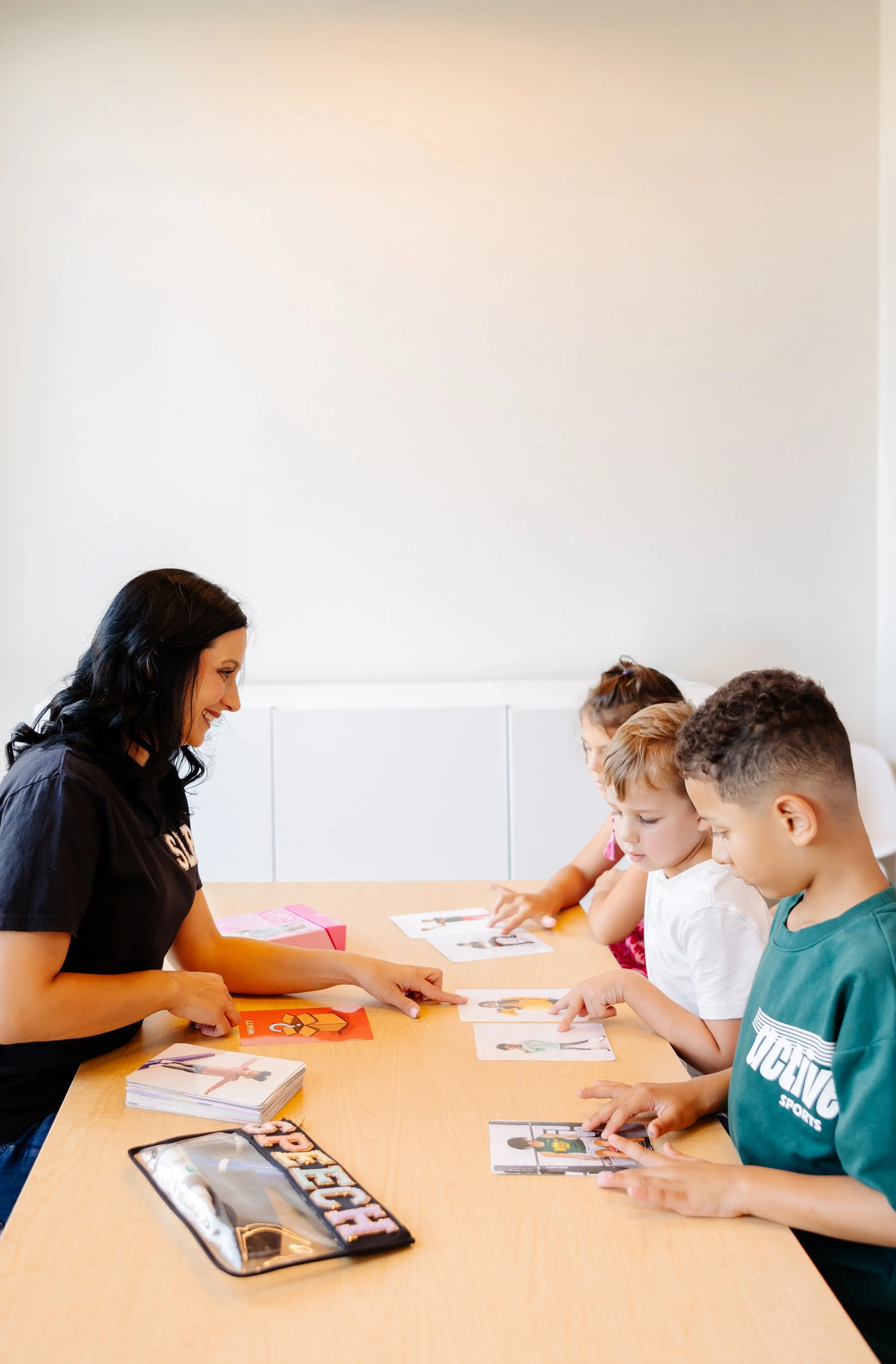
The signs of a speech or language concern look different depending on your child's age, so here's a general sense of what we'd want to know about at each stage.
In babies and toddlers:
Not babbling by 6 months, no words by 12-15 months, not responding to their name consistently, or losing skills they once had are all reasons to reach out sooner rather than later. Babbling isn't just noise, it's your baby's brain practicing the patterns that become words. A limited range of sounds early on can be one of the first signs that something is worth looking at.
In toddlers (18 months–2 years):
Fewer than 50 words by age 2, not yet putting two words together like "more milk" or "daddy go," or being very difficult to understand even for the people closest to them. Parents often ask whether a few words is enough but we look at variety just as much as quantity. A toddler with 20 words that are all requests has a different profile than one with 20 words across many categories.
In preschoolers:
By age 3, strangers should be able to understand most of what your child says. If they can't, or if your child is still mostly using single words when peers are speaking in sentences, that's worth evaluating. Stuttering that has lasted several months, seems to be getting worse, or is accompanied by physical tension is also something to bring to an SLP rather than wait on.
In school-age kids:
Speech and language concerns don't always show up early. Some children communicate well enough in casual settings but start to struggle once school introduces more complex language demands, following multi-step directions, explaining their thinking, reading, spelling, and keeping up in conversation with peers. A teacher flagging concerns, word-finding difficulties, or reading and spelling struggles that don't seem to respond to typical support are all worth taking seriously, even if your child is thriving in other ways.
The Signs That Are Easy to Miss
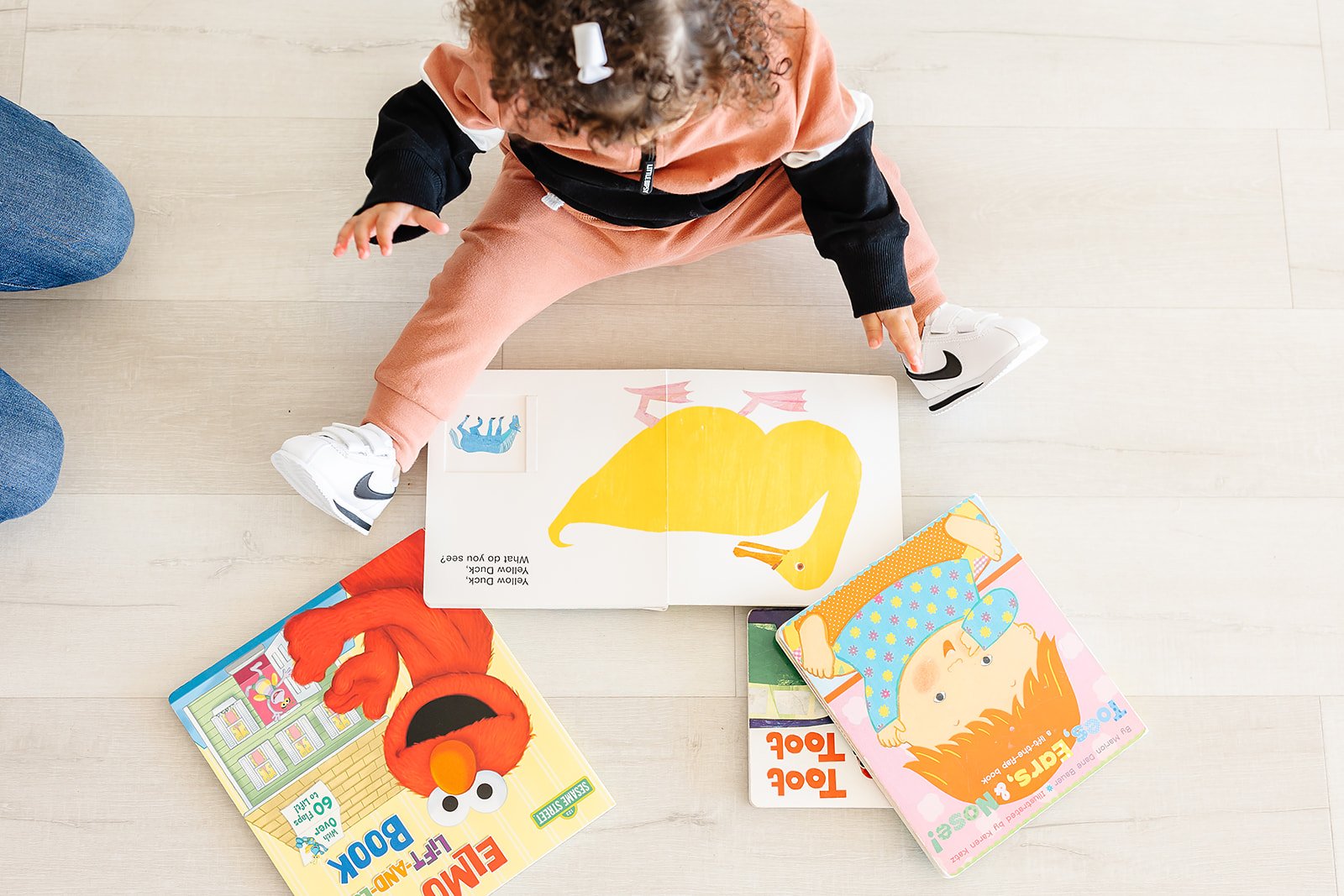
Some of the most meaningful indicators that your child may need speech therapy aren't about how much they talk, they're about what communication feels like day to day.
If you find yourself constantly translating for your child when you're around other people, that's a meaningful pattern. If frustration, meltdowns, or acting out seem to be tied to moments when your child can't express what they need, that's worth paying attention to, behavioral challenges in young children may be linked to communication challenges.
If your child goes quiet around new people, hangs back in group settings, or lets others speak for them, it may be because talking feels hard and they've found ways to avoid it.
If something has just been quietly nagging at you, even if you can't quite put your finger on what it is, that instinct is worth following up on. You know your child better than any checklist does.
In our experience, parents who pursue an evaluation "just to be sure" never regret it.
What About Speech School Services?
If your child is already receiving speech therapy through school, it's still worth understanding what that covers and what it doesn't.
School-based services are tied to educational eligibility criteria, which are often less flexible than clinical criteria. A child can be genuinely struggling and still not qualify because they don't meet the school's threshold for a significant educational impact.
School services are also typically provided in groups, limited to the school year, and focused on goals connected to academic performance rather than your child's full communication profile. Private therapy can fill in those gaps, address areas school services don't cover, or work alongside what school is already providing. Some families find that both together is what moves the needle.
What to Expect From a Speech Evaluation in Springfield IL at UniVie

We start with a conversation, what you've been noticing, what your child's teacher has mentioned, what's been on your mind. That context matters and shapes everything that follows.
The evaluation itself is play-based and interactive, especially for younger children. We assess all the areas relevant to your child's age and your concerns, and at the end we walk you through what we found in plain language, what it means, what we recommend, and what the next step looks like. Not a confusing report handed to you on the way out the door but a real conversation about your child and a clear plan forward.
If you're not quite sure whether an evaluation is the right move yet, a free discovery call is a good place to start. We'll listen to what you're seeing, answer your questions honestly, and help you figure out whether it makes sense to take the next step!
Frequently Asked Questions
How do I know if my child needs speech therapy? The clearest indicators are difficulty being understood by others, frustration around communication, or a teacher or caregiver raising concerns. If you're unsure, an evaluation with a licensed SLP is the right next step.
At what age should a child start speech therapy? As early as concerns are identified. Children as young as 12 to 18 months can benefit from early intervention services. There is no age too young to have concerns evaluated, and the earlier intervention begins, the more effective it tends to be.
What is the difference between a speech delay and a language delay? A speech delay refers to difficulty producing sounds and words clearly. A language delay refers to difficulty with the system of communication itself: understanding language, building vocabulary, forming sentences, and using language in social situations. A child can have one, both, or neither. A full SLP evaluation distinguishes between them.
My child's pediatrician said to wait. Should I? Pediatricians are valuable partners, but a brief well visit is not a speech and language evaluation. If you have specific concerns, you can contact an SLP directly without a pediatrician referral. An evaluation gives you clinical information that a well visit cannot, and early evaluation is almost always preferable to waiting.
What does speech therapy look like for young children? For most young children, therapy is play-based, engaging, and child-led. A skilled SLP targets communication goals through activities that feel like games to the child. Sessions are typically 30 to 45 minutes, and parent involvement is built into the process both because it accelerates progress and because you are the most important communication partner in your child's life.
Can speech therapy help with reading? Yes, and this is a connection many parents don't know about. Reading is a language skill, and many reading difficulties are rooted in phonological processing, vocabulary gaps, or oral language delays all areas that fall within the SLP's scope of practice. SLP-led reading intervention is particularly effective for children with dyslexia or language-based learning differences. Learn more in our post on the connection between speech therapy and reading.
What if my child does well at home but struggles at school? Some children compensate in familiar environments and then hit a wall in the less structured, more linguistically demanding context of school. An SLP evaluation would look at both environments and at the demands being placed on their communication across settings.
Is it too late to start speech therapy if my child is already in elementary school? It’s never too late! Older children and school-age kids absolutely benefit from speech therapy. Progress may take longer than it would have with earlier intervention, but meaningful improvement is possible at any age.
UniVie Therapy Solutions provides mobile speech therapy and SLP-led reading intervention for children in Springfield, Chatham, and surrounding Illinois communities. Virtual services are available across Illinois. To learn more or schedule a free discovery call, visit univietherapy.com/contact.
Related reading from the UniVie blog: