Signs of a Speech Delay: What you should Know

You know your child better than anyone so when communication starts feeling harder than it should, you notice.
Maybe your child isn’t talking as much as other kids their age, they get upset when they can’t express what they want, or you find yourself translating for them more often than you expected to at this stage.
Not every speech delay is obvious right away. This guide walks through the signs of speech delays in children and patterns that can signal your child may need some extra speech support.
What Is a Speech Delay?
A speech delay means your child’s communication skills are developing more slowly than expected for their age. But “speech” and “language” are broader than most people realize and delays don’t always look the same from child to child.
Here’s the difference:
Speech is the physical ability to produce sounds and words clearly. This includes pronunciation, articulation, voice, and fluency.
Receptive language is what your child understands, directions, questions, vocabulary, and meaning.
Expressive language is what your child can communicate, words, ideas, wants, needs, and sentences.
Social communication is how your child uses communication with other people, including interpersonal skills.
A child can have difficulty in just one of these areas or several at the same time. That’s why speech delays can look so different from one child to another.
Related: The connection between speech and reading
What Causes a Speech Delay?
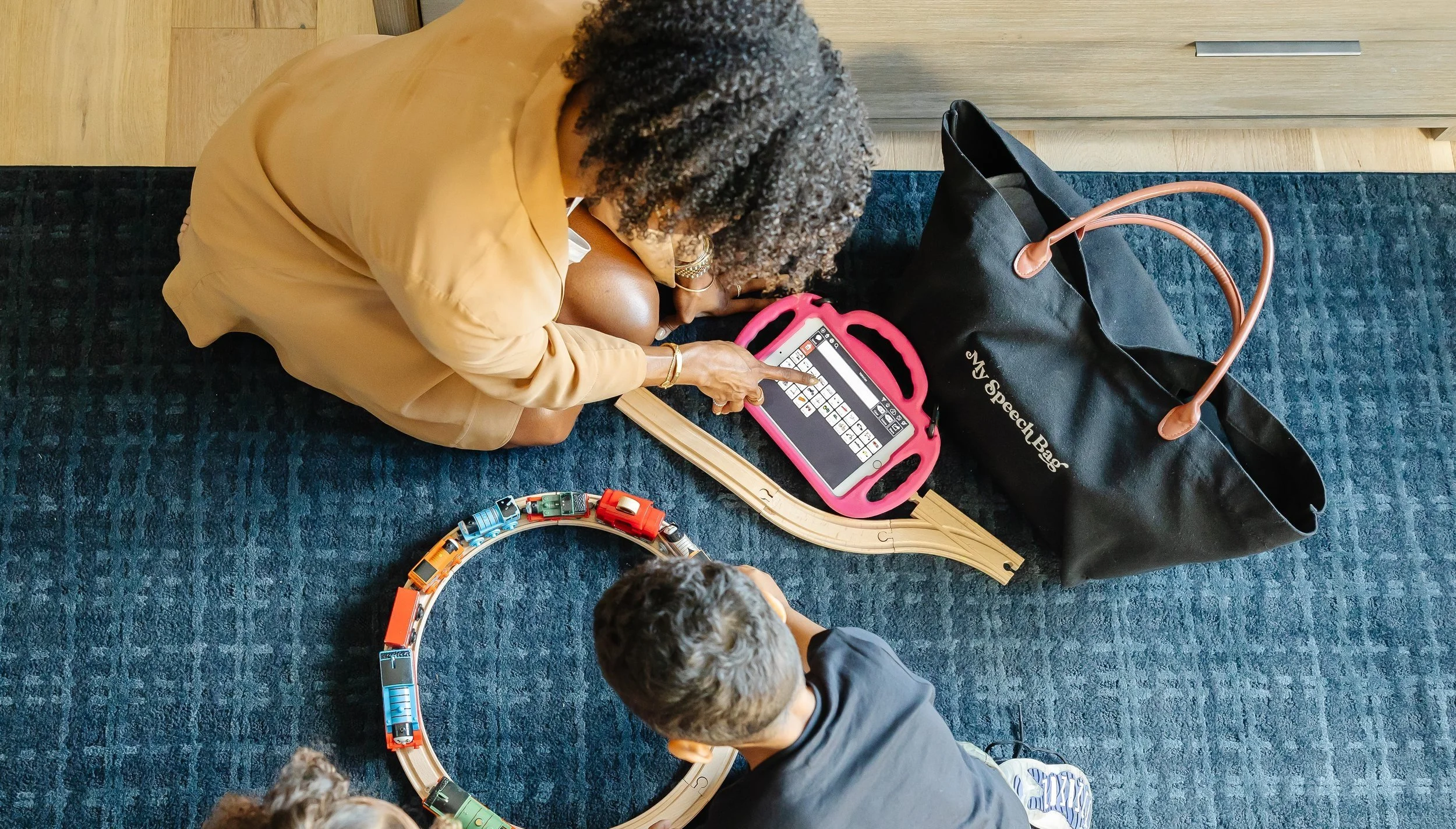
It’s natural to wonder if something you did (or didn’t do) caused your child’s speech delay but (trust me) you haven’t done anything wrong.
Speech and language development is complex, and delays can happen for many different reasons, sometimes one clear factor, but often a combination of factors, or no identifiable cause at all.
Here are some of the most common contributors:
Hearing differences (including frequent ear infections).Hearing is the foundation of speech and language development. If a child isn’t hearing sounds clearly, it becomes harder to learn and reproduce them accurately. Even temporary hearing loss from frequent ear infections during the toddler years can interrupt consistent language input during a critical period of development. This is why hearing is always one of the first areas checked during an evaluation.
Oral motor and structural differences.Clear speech depends on the coordination of the lips, tongue, jaw, and palate. When those structures don’t move efficiently or comfortably together, speech sounds can be harder to produce. Some children also have structural differences, such as tongue tie (ankyloglossia), which may or may not impact speech depending on severity and function.
Childhood apraxia of speech (CAS).Apraxia is a motor planning difference, meaning the brain has difficulty coordinating the precise movements needed for speech. A child with CAS often knows exactly what they want to say but struggles to consistently “program” and produce the sounds. It’s a more complex speech disorder that requires targeted, specialized support from a speech-language pathologist.
Language-based learning differences (including dyslexia). Early speechand language delays can sometimes be early indicators of broader language-based learning differences that become more noticeable when reading and writing begin. Challenges with sound awareness, vocabulary, and sentence structure can all be early pieces of this bigger picture.
Autism Speech and language differences are common in autistic children, though they vary widely. Some children may have limited spoken language, rely more on gestures, or use repetition (echolalia) as a communication style. Speech delay alone is not enough to suggest autism, but it can be one piece of the developmental profile.
Gestalt language processing.Some children learn language in “chunks” rather than individual words, repeating phrases from shows, songs, or conversations before breaking them down into original speech. This is known as gestalt language processingand it is a valid language pathway. When identified correctly, it can be supported in a way that matches how the child naturally learns.
Developmental Language Disorder (DLD).DLD is a persistent difficulty with language development that isn’t explained by hearing loss, autism, or another known condition. It affects vocabulary, grammar, understanding, and sentence formation, and it often continues into school age if not supported. Despite being relatively common, it’s frequently missed or misidentified.
Environmental and interaction factors.Language develops through back-and-forth interaction. Limited conversational engagement, high screen exposure without interaction, or fewer opportunities to hear varied language can all impact development. These factors alone don’t typically cause significant delays, but they can contribute.
Family history.Speech and language delays often run in families. A history of late talking, speech therapy, or reading difficulties in parents or siblings can increase the likelihood of similar challenges for a child.
In many cases, there isn’t a single clear cause but early identification and support can make a meaningful difference in how communication develops over time.
Signs of a Speech Delay: What to Actually Watch For

Speech delays don't always look the way parents expect. Rather than a list sorted by age, this section organizes the signs by what they look like in real life, the patterns parents describe to me in that first discovery call, often not quite knowing how to name what they're seeing.
Your Child Is Hard to Understand
Parents typically understand their own child far better than anyone else does, which makes it easy to underestimate the gap. If you routinely translate for your child, if strangers consistently look to you to decode what was said, or if even you are guessing, that pattern is worth taking seriously.
Your Child Is Communicating Mostly Without Words
Some children develop effective non-speaking systems such as pulling, pointing, signs, facial expressions, verbal grunting and the absence of words and phrases may not cause concern because they are getting their needs met.
Your Child's Frustration Is Bigger Than the Situation
When a child cannot express what they need, that frustration comes out somewhere, meltdowns, hitting, biting, shutting down. These behaviors are frequently labeled as behavioral problems before anyone asks whether communication might be at the root.
Your Child's Communication Is Inconsistent
A word used clearly once and then never again or speech that flows at home but disappears in groups. Inconsistency confuses parents and it's often mistaken for stubbornness or a bad day.
Your Child Understands Less Than Expected
A child who follows routines well can appear to understand more than they do, because routines carry context. When the routine changes, when directions get longer, or when new vocabulary appears, the gap becomes more visible.
Your Child's Language Isn't Growing
New words should be appearing regularly, especially in the toddler years. Sentences should be getting longer, grammar should be emerging, and questions should be multiplying. When that trajectory stalls that plateau is a sign that support is needed.
Your Child Avoids Communication Situations
A child who is struggling to communicate learns quickly that communication is hard, and they start to avoid it. This can look like shyness, introversion, or a child who "just doesn't talk much." When avoidance is tied specifically to communication demands, going quiet around new people, letting others speak for them, withdrawing from group settings, that may be a coping pattern.
Regression
At any age, if a child loses communication skills they previously had, stops using words, goes quiet after a period of babbling, withdraws from back-and-forth interaction, that warrants an evaluation. Regression is not a normal part of development and should never be waited out.
When to Act: A Straightforward Guide
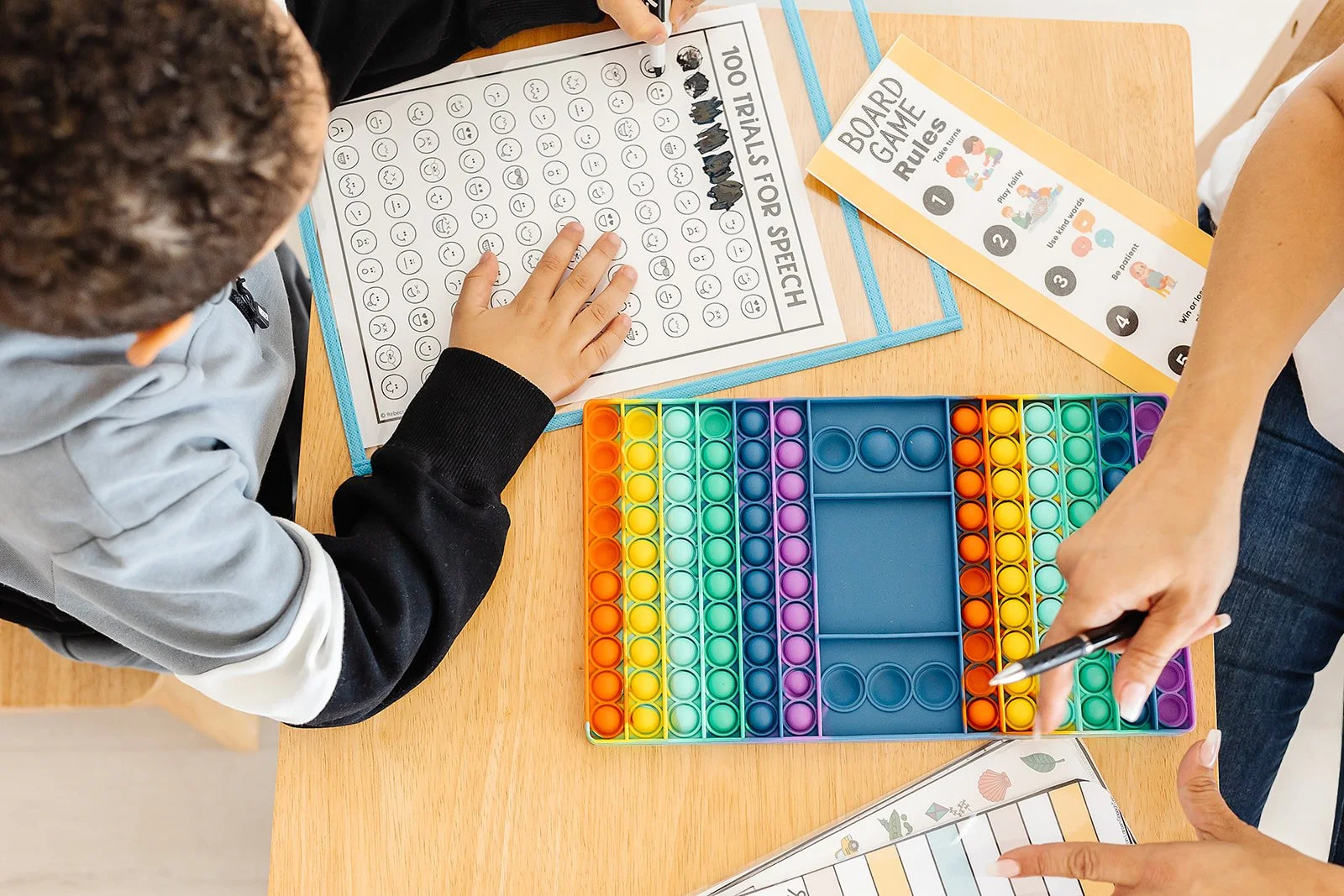
Consult a speech-language pathologist if your child:
Has not said their first word by 15 months
Has fewer than 50 words and is not combining words by age 2
Is losing skills they previously had, at any age
Is not pointing to share attention by 12 months
Is very difficult to understand, even for parents, past age 2
Strangers cannot understand most of what they say past age 4
A teacher, caregiver, or other professional has flagged a concern
Has a known diagnosis (autism, apraxia, Down syndrome, hearing loss) that puts communication at risk
Is adding words slowly or inconsistently
Gets frequently frustrated in communication
Has behavior that seems connected to communication difficulty
Had a history of speech or language services and has been discharged
Has frequent ear infections that may be affecting hearing
Trust your gut if:
Something has been nagging at you and you can't quite explain it
Your child used to communicate differently and something has shifted
You find yourself repeatedly translating for your child to others
What To Do IF You Notice Speech Delay Signs
If you've recognized your child in any of the sections above, here’s what to do.
Step 1: Write down what you're observing. Before any appointment, note specific examples of what your child does and doesn't do. How many words do they use? What do they understand? What situations seem hardest? This context helps the clinician enormously.
Step 2: Check their hearing. Hearing is foundational to speech and language. If your child hasn't had a recent hearing screening, or if you have any concern about their hearing, get it checked. Hearing loss is a common contributor to a speech delay.
Step 3: Contact a speech-language pathologist. In many cases, you do not need a referral to reach out to an SLP directly. A licensed SLP can evaluate your child, explain what they're seeing, and make recommendations whether that's therapy, a home program, a referral, or simply a follow-up timeline.
Step 4: Don't wait for your child to "grow out of it." Some children do develop skills without intervention. However, children who benefit most from therapy are those who receive it early, during the window when the brain is most responsive to language learning.
How UniVie Supports Families in Springfield, IL and Surrounding Areas (and Virtually across IL)
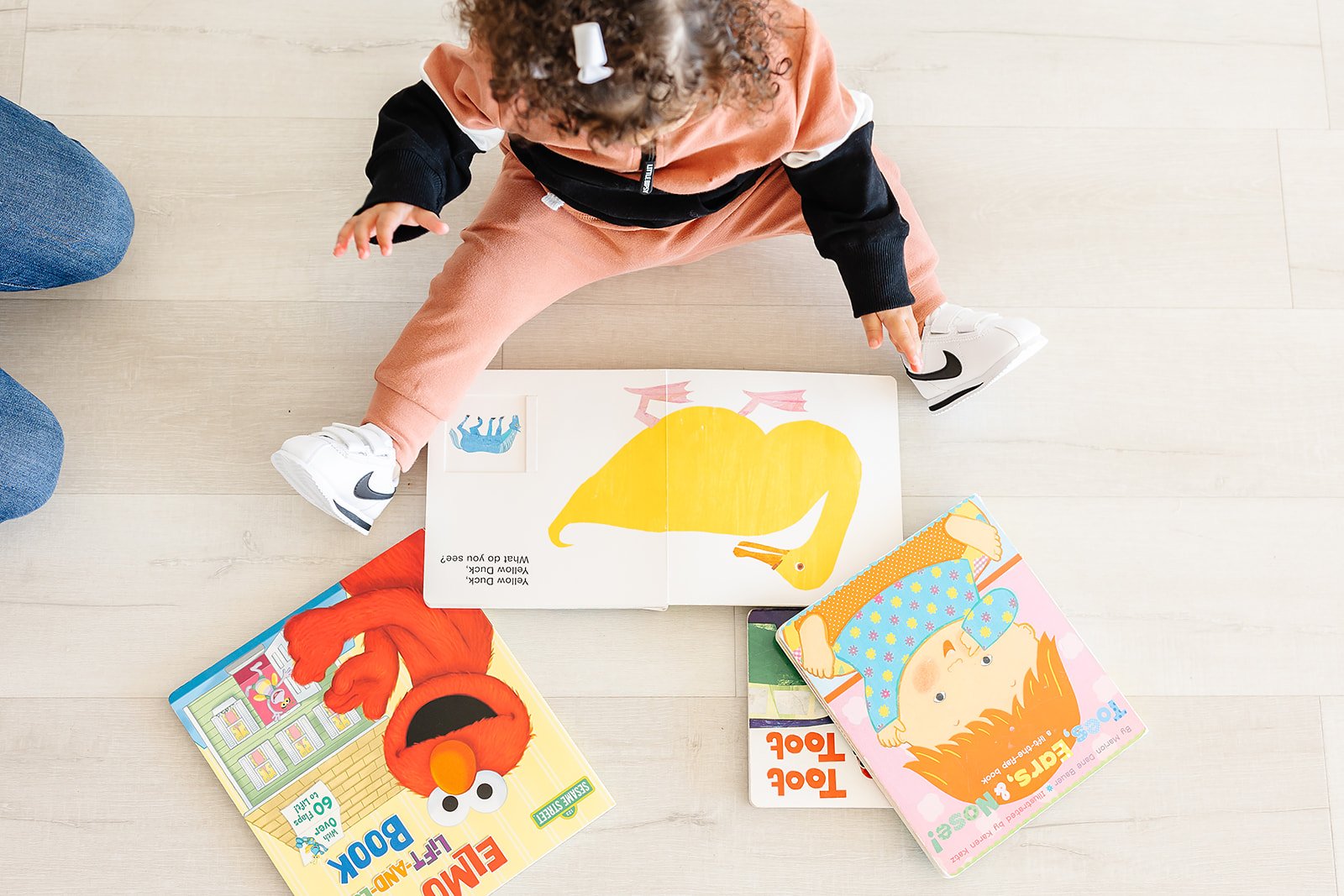
At UniVie Therapy Solutions, we work with families across Springfield, Chatham, and surrounding central Illinois communities who are navigating exactly the questions about speech. Whether you've been worried for months or just started noticing something this week, we're here to help you figure out the next step.
We are a mobile, private-pay practice, which means we come to you. Sessions happen in your home, your child's school, or their daycare, the environments where your child is most comfortable and where communication matters most.
Every evaluation and every therapy session at UniVie is led by Daj Mitchell, a licensed and ASHA-certified speech-language pathologist with specialized expertise in:
Speech sound disorders and childhood apraxia of speech (CAS)
Autism and gestalt language processing
Language delays and developmental language disorder (DLD)
Augmentative and alternative communication (AAC)
Dyslexia and reading intervention
We are neurodiversity-affirming and strengths-based which means we don't look for what's “wrong” with your child, we look for how they communicate, what they need, and how to meet them there.
Book a free 15-minute discovery call below! We'll listen, answer your questions honestly, and help you decide whether an evaluation is the right next step.
Frequently Asked Questions About Speech Delay Signs
What are the first signs of a speech delay? Early signs include limited babbling by 6 months, not responding to their name by 9 to 12 months, no gestures such as pointing or waving by 12 months, no first words by 12 to 15 months, and fewer than 50 words without two-word combinations by age 2. Any loss of skills previously present is also a concern at any age.
What is the most common sign of speech delay in toddlers? Fewer words than expected for their age is the most commonly identified sign. The absence of pointing to share attention, the absence of reciprocal communication, and limited understanding of what is said to them is equally important as well. Word count alone doesn't tell the whole story.
Can a child have a speech delay and still be smart? Absolutely. Speech and language delays are not measures of intelligence. Many children with speech or language delays are cognitively advanced in other areas. A delay in communication reflects how a child's brain is processing language, not their potential. In fact, children with strong comprehension paired with limited expressive output are often described by their families as clearly "knowing everything" they just need help expressing it.
What is the difference between a speech delay and autism? Speech and language delays can occur alongside autism, but they also occur without it. The distinguishing features of autism go beyond speech and language to include differences in social communication (joint attention, gesture use, social reciprocity), selective interests and repetitive behaviors. An SLP can identify speech and language differences and be a part of a formal autism diagnosis team, but will work alongside a developmental pediatrician or psychologist to make a formal autism diagnosis. If you're concerned about both, an evaluation that looks at the full communication and social profile is the right starting point.
What is a late talker and should I be worried? A late talker is a toddler usually between 18 and 30 months with limited spoken vocabulary but typical development in other areas, understanding, play, social skills, and motor skills. Some late talkers catch up on their own. Research suggests that about half do not and go on to have persistent language differences. Given that early intervention is more effective than later intervention, an evaluation at this stage is recommended rather than waiting to see.
How is a speech delay diagnosed? A speech delay is identified through a comprehensive evaluation by a licensed speech-language pathologist. The evaluation assesses receptive language, expressive language, speech sound production, fluency, social communication, and oral motor function. It combines formal assessment tasks, observation during play, and parent report. The SLP then explains the results, identifies any areas of concern, and recommends next steps.
Does a speech delay mean my child will need therapy for years? Not necessarily. Some children make rapid progress with a short period of targeted therapy. Others benefit from longer-term support, particularly when the underlying profile is more complex. The duration depends on the nature and severity of the delay, when intervention begins, and how well skills generalize to everyday communication. Early intervention consistently produces faster progress than intervention that begins later.
UniVie Therapy Solutions provides mobile speech therapy and SLP-led reading intervention for children in Springfield, Chatham, and surrounding Illinois communities. Virtual services are available across Illinois. To learn more or schedule a free discovery call, visit univietherapy.com/contact.
Related reading from the UniVie blog: