What Is AAC in Speech Therapy?

If your child has been referred to a speech-language pathologist (SLP), you may have heard the term "AAC" and wondered what it means and whether it's right for your family.
So what does AAC stand for in speech therapy? AAC stands for Augmentative and Alternative Communication. It refers to any method beyond natural speech that helps a person express themselves. This includes everything from pointing to pictures on a board to using a high-tech speech-generating device.
This guide answers everything you need to know about AAC in speech therapy: what it stands for, how it works, who benefits, and how to get started.
Searching for a speech language therapist in Springfield, IL? Book a free discovery call to chat about our services. We offer parent coaching, reading intervention, speech therapy, and more.
1. What Is AAC in Speech Therapy?
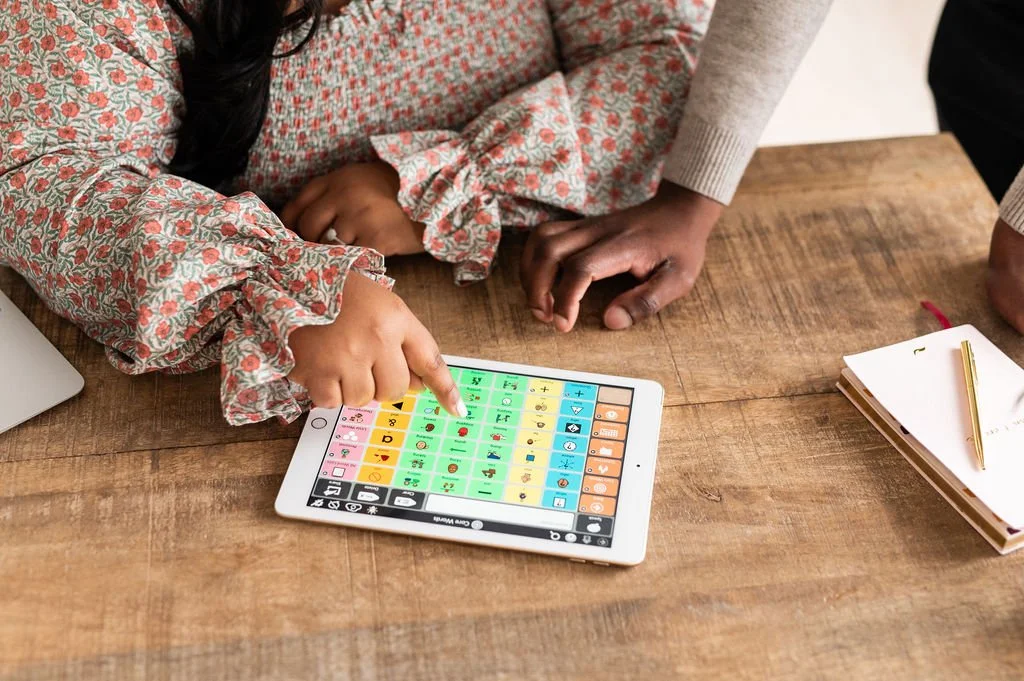
AAC (Augmentative and Alternative Communication) is a broad category of tools and strategies used in speech therapyto support individuals who have difficulty using spoken language alone to communicate their needs, thoughts, and feelings.
"Augmentative" means adding to or supplementing existing speech. "Alternative" means providing a different way to communicate when speech is not yet possible or reliable.
In speech therapy, an SLP will assess a child's current communication abilities and recommend the AAC approach best suited to their needs, strengths, and goals. AAC is never a one-size-fits-all solution, but is always tailored to the individual.
What is AAC used for in speech therapy?
AAC is used to help people who struggle to communicate through speech alone. In speech therapy, it gives individuals a reliable way to express wants, needs, feelings, and ideas, supporting both daily communication and long-term language development.
2. The Two Main Types of AAC
AAC is typically divided into two categories: unaided and aided communication.
1. Unaided AAC
Unaided AAC requires no external tools or devices. It relies entirely on the person's own body. Examples include:
Sign language (e.g., American Sign Language or simplified sign systems like Makaton)
Gestures and facial expressions
Body language and pointing
2. Aided AAC
Aided AAC uses external supports, either low-tech or high-tech. Examples include:
Low-Tech AAC
Picture communication boards
PECS (Picture Exchange Communication System)
Symbol-based books or binders
Communication cards
High-Tech AAC
Speech-generating devices (SGDs)
iPad/tablet apps (e.g., Proloquo2Go, TouchChat)
Eye-gaze technology
Voice output devices (VOCAs)
Are you a parent concerned about your child’s speech?
At UniVie Therapy Solutions, we offer 1:1 parent coaching to get all your questions answered. Check out caregiver coaching and schedule your session today!
3. Who Can Benefit from AAC Speech Therapy?
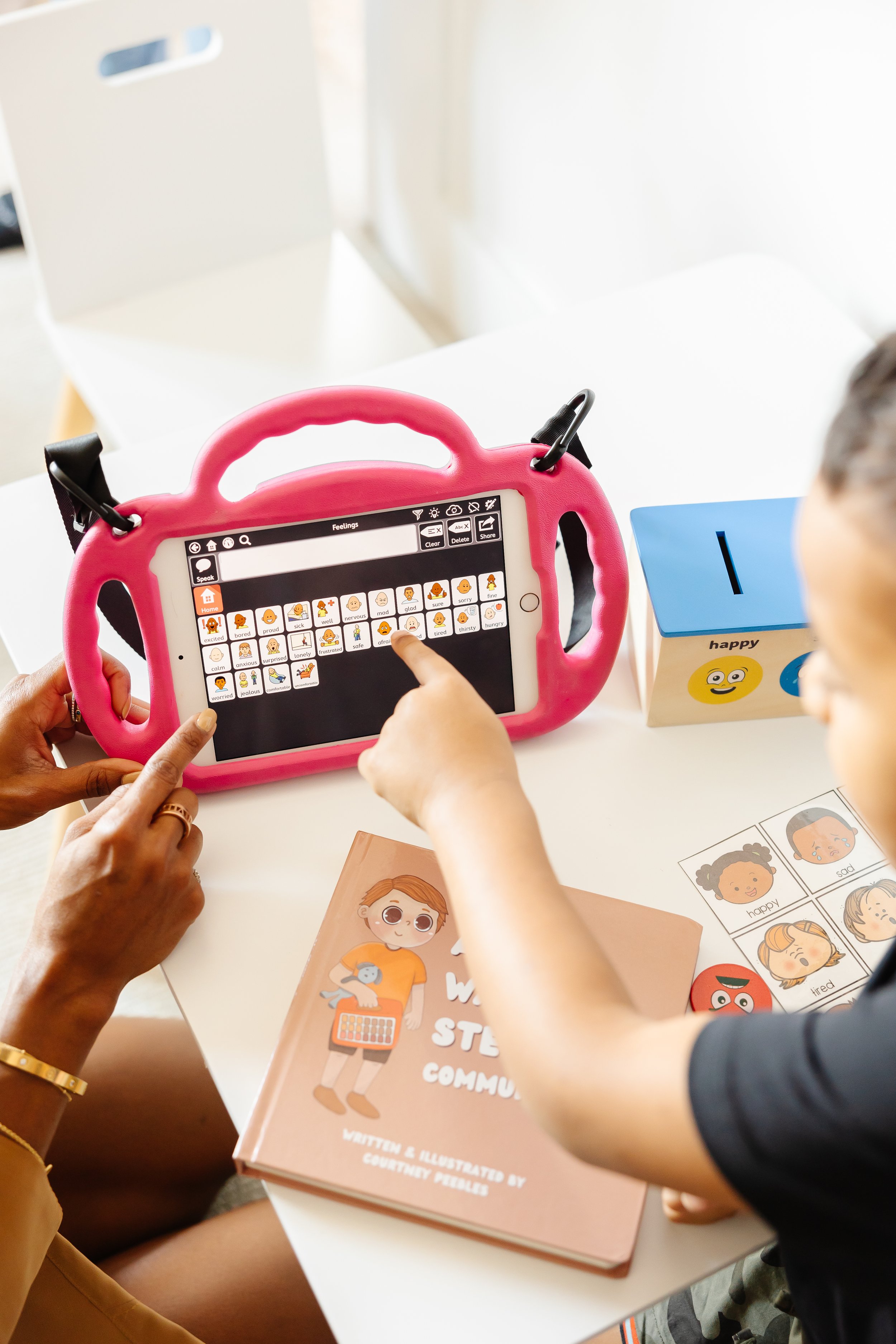
AAC is not limited to any single diagnosis. Speech-language pathologists recommend it for children and adults across a wide range of conditions, including:
Cerebral palsy
Down syndrome
Developmental language disorder (DLD)
Childhood apraxia of speech (CAS)
Acquired conditions in adults, such as ALS, stroke, or brain injury
A common misconception is that AAC is a "last resort" only for people with no speech at all. In reality, AAC is often introduced early, even when a child has some speech, to reduce frustration, support language growth, and build communication confidence.
Does using AAC prevent a child from developing speech?
Research consistently shows that AAC does not hinder speech development and often supports it. Studies indicate that children who use AAC frequently show improvements in spoken language over time. AAC gives a child a reliable way to communicate while their speech is still developing.
4. How AAC Works in a Speech Therapy Session
When your child begins AAC-focused speech therapy, the SLP will typically:
Conduct a communication assessment to understand your child's current skills, needs, and interests.
Recommend an appropriate AAC system based on their motor, cognitive, and communication profile.
Teach your child to use the system through play-based, naturalistic activities.
Train parents and caregivers because AAC works best when used consistently at home, school, and in the community.
Monitor progress and adjust the system as your child's communication evolves.
It's important to understand that AAC is not just about the device or board, it's about creating a communication-rich environment. Your involvement as a parent is one of the most powerful factors in your child's success.
👉🏻 Check out our info page on speech therapy service in Springfield, Il!
5. AAC and the LAMP Approach: What Parents Should Know

One well-known framework used by many SLPs is LAMP, Language Acquisition through Motor Planning. LAMP focuses on building motor patterns that help children access their AAC device quickly and automatically, in the same way that spoken words become automatic over time.
Other popular AAC approaches and systems you may encounter include:
PECS (Picture Exchange Communication System): A structured visual approach common in ASD therapy
Core vocabulary instruction: Teaching high-frequency words that apply across contexts ("more," "go," "want," "help")
Robust AAC: Comprehensive systems with large vocabularies that grow with the child
Related: Gestalt Language processing: What it is, how it works, and how speech therapy can help.
6. How to Know If Your Child Needs AAC
Your child may benefit from AAC evaluation if they:
Are not meeting speech and language milestones
Show frustration when trying to communicate
Have a diagnosis that commonly affects communication
Rely heavily on gestures, pulling, or crying to express needs
If you're concerned about your child's communication development, the first step is to request a speech-language evaluation. Your child's pediatrician can provide a referral, or you can contact our private speech therapy clinic directly.
At what age can a child start using AAC?
There is no minimum age for AAC. Research supports introducing AAC early, for children with communication delays. Early access to AAC does not create dependence, it builds communication skills during the most critical window of language development.
7. Common Questions Parents Ask About AAC
Will my child always need AAC?
Not necessarily. Some children use AAC as a bridge, a support system while their spoken language develops, and eventually transition to speech as their primary mode of communication. Others use AAC as a long-term tool. Either outcome is valid. The goal is always effective, functional communication.
Is AAC covered by insurance?
In many cases, yes. High-tech AAC devices may be covered by Medicaid, private insurance, or school district funding under IDEA (Individuals with Disabilities Education Act). Your SLP can help guide the funding and documentation process.
What's the difference between AAC and speech therapy?
AAC is a strategy or tool used within speech therapy. Speech therapy is the broader service provided by a licensed SLP. An SLP may use AAC as one approach among many, depending on your child's goals and needs.
8. How to Support Your Child's AAC Use at Home
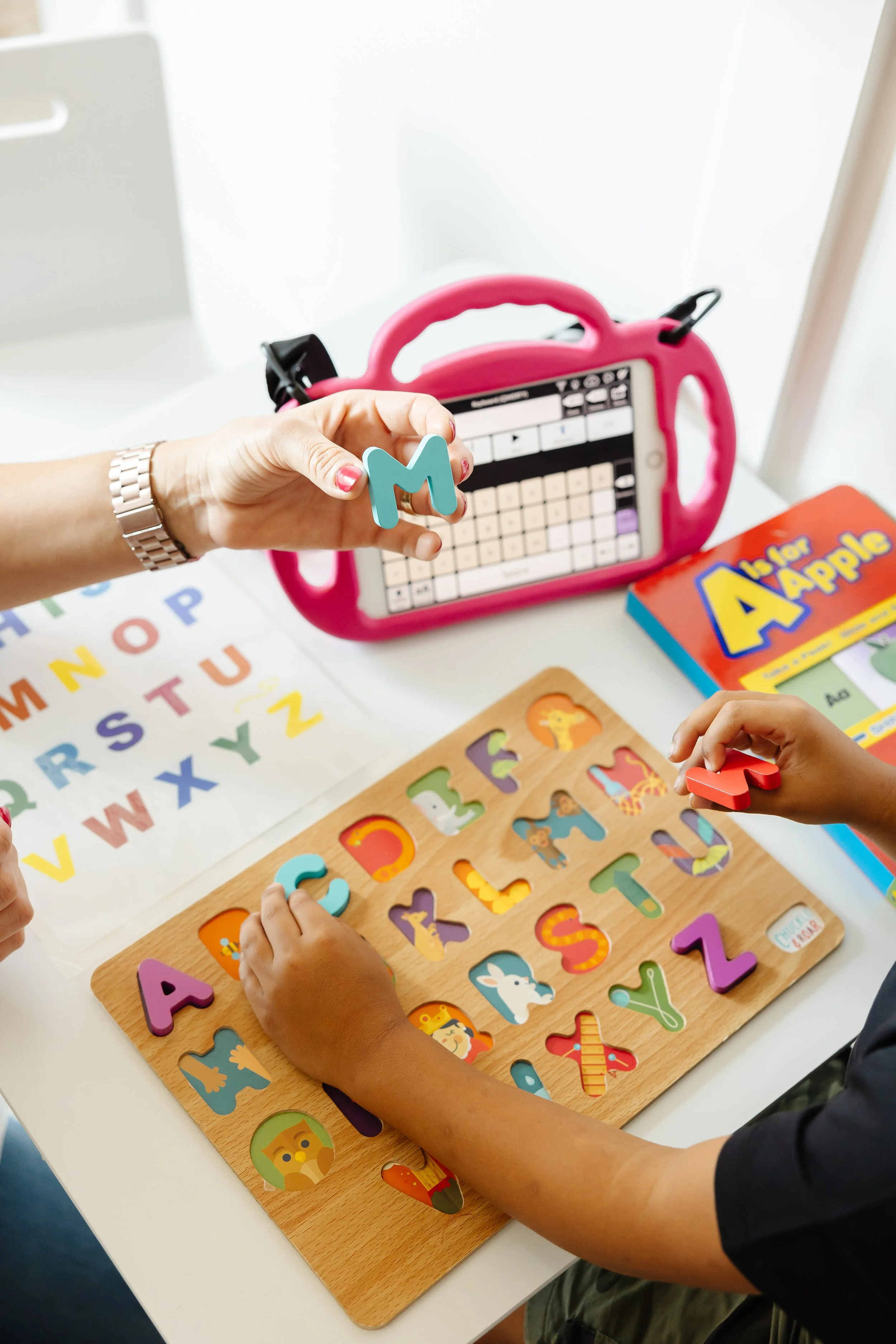
AAC works best when it is used consistently across all environments. Here's how you can support your child:
Model the AAC system yourself: use it to communicate with your child, not just to prompt them
Give your child time to respond: AAC takes more processing time than speech
Celebrate all communication attempts: not just "correct" ones
Keep the device or communication board accessible at all times
Collaborate closely with your child's SLP and school team
The concept of "aided language input" (or "aided language modeling") is key here. When you use the same AAC system to communicate with your child, you show them how language works in a natural, low-pressure way.
Frequently Asked Questions About AAC in Speech Therapy
What does AAC stand for in speech therapy?
AAC stands for Augmentative and Alternative Communication. It refers to any method, beyond natural speech, that helps a person express themselves, including picture boards, sign language, and speech-generating devices.
Who needs AAC speech therapy?
AAC is recommended for children and adults who have difficulty communicating through speech alone. Common conditions include autism spectrum disorder, cerebral palsy, Down syndrome, childhood apraxia of speech, and acquired conditions like ALS or stroke.
Does AAC stop a child from talking?
No. Research consistently shows AAC supports, not hinders, speech development. Children who use AAC often show growth in spoken language over time. AAC gives children a reliable way to communicate while their speech skills are still developing.
What is the difference between low-tech and high-tech AAC?
Low-tech AAC includes tools like picture communication boards, symbol cards, and PECS books, no batteries or screens required. High-tech AAC includes speech-generating devices, iPad apps like Proloquo2Go, and eye-gaze technology. A speech-language pathologist will recommend the right level for your child.
How do I get AAC for my child?
Start by requesting a speech-language evaluation through your child's pediatrician, school, or a private speech therapy clinic. The SLP will assess your child's needs and, if appropriate, recommend and trial an AAC system. Funding may be available through Medicaid, private insurance, or school district services under IDEA.
At what age can a child start using AAC?
There is no minimum age. AAC can be introduced early for children with communication delays. Early access to AAC is strongly supported by research and does not create dependence, it builds communication skills during the most critical window of language development.
How long does it take for AAC to work?
Progress varies by child and system. Some children begin communicating functionally within weeks; others need months of consistent practice. Success depends on the right system choice, regular therapy, and consistent use of AAC at home, school, and in the community.
Final Thoughts: AAC Opens Doors!

Whether your child uses a simple picture board, an app on an iPad, or a robust speech-generating device, AAC empowers them to connect with the world around them.
If you suspect your child could benefit from AAC, don't wait. Early interventionmakes a real difference. Reach out to a licensed speech-language pathologist for an evaluation and start the conversation today.
Ready to learn more?
Book a free consultation with UniVie todayand let’s get your questions answered!